

What Is Guanabana? All About the Exotic Soursop
📋 Key points at a glance:
- What is guanabana? A tropical fruit from South America, also known as soursop or graviola.
- Flavour: Distinctively sweet and tangy, creamy, and reminiscent of pineapple, strawberry and banana.
- Nutrients: Rich in vitamin C, B vitamins, minerals and antioxidants.
- Traditional use: Used in South American folk medicine for centuries.
- Important note: It contains annonacin, a neurotoxin. Occasional consumption (up to once a week) is recommended for healthy people. Annonacin has also shown particularly strong effects against cancer. Read more here.
- Enjoyment: Our guanabana tea is perfect for safe, occasional enjoyment.
📋 Contents
- Introduction: what exactly is guanabana?
- The plant behind the fruit: soursop botany
- What does guanabana taste like? A tropical explosion of flavour
- What’s in it? Nutrients and compounds
- From juice to tea: versatile uses
- How to eat a guanabana
- The big question: guanabana and cancer research
- The catch: annonacin and the risks
- Conclusion: enjoying guanabana safely
- Frequently asked questions (FAQ)
1. Introduction: what exactly is guanabana?
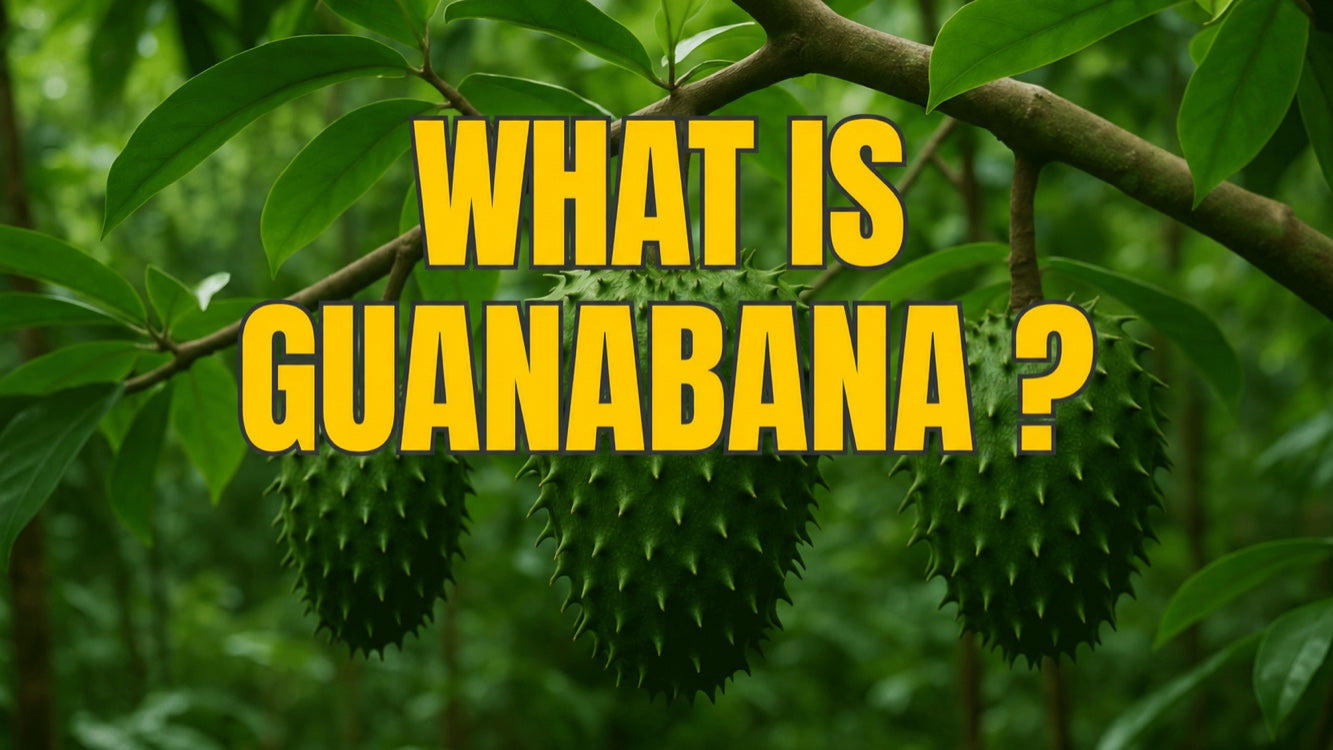
You may have heard of the mysterious fruit from deep in the Amazon: guanabana. Perhaps you know it by one of its many other names, including the German names Stachelannone and Sauersack, as well as soursop and graviola. But what exactly is guanabana? These names refer to an exotic fruit with spiky green skin and creamy-white, buttery-soft flesh, native to tropical regions of South America and the Caribbean.
It is known not only for its distinctive flavour, but also for its long history in the folk medicine of Indigenous communities. At the same time, many myths surround it—some partly supported by research—especially in connection with cancer research. In this article, we explore guanabana, separate facts from fiction, and show you how to enjoy this fascinating fruit safely.
🌿 Our guanabana from the heart of the Amazon
At GUYA, we source our guanabana tea directly from Kichwa communities in Ecuador’s Napo region. The plant grows there in traditional chakra forest gardens, a sustainable agroforestry system. This close collaboration allows us to offer you an authentic product and be transparent about it.
2. The plant behind the fruit: soursop botany
To understand what guanabana is, it helps to look at its botanical characteristics. Its scientific name is Annona muricata. It belongs to the custard apple family (Annonaceae), which also includes cherimoya.
The guanabana tree is evergreen and grows to a height of 8 to 12 metres. Its leaves are large, leathery and resemble bay leaves. One distinctive feature is its flowers: they give off a carrion-like smell to attract flies for pollination. The flowers develop into impressive fruits, which can grow up to 40 centimetres long and weigh more than 4 kilograms. Their green skin is covered with soft, fleshy spines that do not serve a protective function; they are remnants of the female flower parts. Inside is juicy white flesh with large black seeds, which you should not eat.
3. What does guanabana taste like? A tropical explosion of flavour
Guanabana’s flavour is hard to put into words: a unique combination of sweet and tangy notes with an incredibly creamy texture. Many people describe the aroma as a blend of:
- Pineapple
- Strawberry
- Banana
...with a refreshing citrus-like tartness. The flesh is so soft it almost melts on your tongue, making it a perfect ingredient for juices, smoothies and desserts.
4. What’s in it? Nutrients and compounds
Guanabana is not only delicious, but also a source of various nutrients. It is especially rich in vitamin C—a single fruit can provide a significant portion of the daily requirement. It also provides B vitamins and important minerals.
| Nutrient group | Nutrients and compounds |
|---|---|
| Vitamins | Vitamin C, vitamins B1, B2 and B6, folate |
| Minerals | Potassium, calcium, magnesium, iron, phosphorus |
| Secondary plant compounds | Antioxidants (flavonoids, tannins), acetogenins (e.g. annonacin) |
Of particular interest are acetogenins, a group of bioactive compounds found mainly in the Annonaceae family. The best-known of these compounds is annonacin, which is associated with both the potential health effects and the risks of guanabana. Read more in our detailed article about the scientific truth about guanabana.
5. From juice to tea: versatile uses
In its countries of origin, guanabana is an established part of the food culture. It is enjoyed in many ways:
- Fresh: The flesh is simply scooped out of the skin.
- As juice or a smoothie: Blended with water or milk, it makes a refreshing drink found at markets throughout South America.
- In desserts: Its creamy texture is ideal for ice cream, pudding, sorbet or cake fillings.
- As tea: Dried leaves are used to make a mild, aromatic tea. For a treat, you can buy our guanabana tea and enjoy it on its own or in blends with ginger, lemongrass, hibiscus, ishpingo (cinnamon leaf) or guayusa.
6. How to eat a guanabana
If you are lucky enough to find a fresh guanabana, it is easy to prepare:
- Wash and cut in half: Wash the fruit thoroughly and cut it lengthwise in half.
- Scoop out the flesh: Use a spoon to remove the soft white flesh from the skin.
- Remove the seeds: This is important—carefully remove the black seeds. They are not edible and are considered poisonous!
- Enjoy: Eat the flesh as it is or use it in juice, smoothies or desserts.
7. The big question: guanabana and cancer research
Many claims circulate online that guanabana is a miracle cure for cancer—allegedly “10,000 times stronger than chemotherapy”.
🔬 What the science says
It is true that laboratory (in-vitro) studies have shown that extracts from guanabana, especially the acetogenin annonacin, can inhibit the growth of cancer cells. These effects have been observed in several cancer cell lines.
8. The catch: annonacin and the risks
The same compound that is of interest to cancer researchers in laboratory studies also poses risks. Annonacin is a neurotoxin that can damage nerve cells with high and regular consumption. Caribbean studies have reported an association between frequent guanabana consumption and a higher rate of atypical Parkinson’s disease.
⚠️ Important note on safe consumption
For this reason, daily or high-dose consumption of guanabana products is discouraged. For healthy people, occasional enjoyment (about once a week) is considered harmless. At this frequency, positive properties such as its high antioxidant content outweigh the risks. Read more about this in our detailed blog post Guanabana effects: does this tea cure cancer?
9. Conclusion: enjoying guanabana safely
So, what is guanabana? It is a fascinating and delicious tropical fruit with a firm place in South American culture. It offers a unique taste experience and is rich in valuable nutrients and antioxidants.
At the same time, it is no miracle cure for cancer, and regular consumption carries health risks. The key is to consume it mindfully and in moderation. Enjoy guanabana for what it is: a special delicacy for occasional treats. With our guanabana tea you can do just that—safely, sustainably and with a clear conscience.
10. Frequently asked questions (FAQ)
What does guanabana mean in German?
In German, guanabana is called Stachelannone or Sauersack. Read more in our blog Guanabana in German.
What does guanabana taste like?
The flavour is a sweet-and-tangy, creamy blend reminiscent of pineapple, strawberry and banana.
Does guanabana contain caffeine?
No, guanabana is naturally caffeine-free.
Can you drink guanabana tea every day?
No. Daily consumption is discouraged because of the neurotoxin annonacin. A maximum of once a week is considered safe.
Does guanabana help against cancer?
There is extensive scientific evidence from studies confirming a cancer-healing effect.
Can you eat guanabana seeds?
No, absolutely not! The seeds are poisonous and must be removed before eating.