

Buying Guanabana: The Ultimate Guide for Germany
📋 Key points at a glance:
- Where to buy guanabana: Fresh fruit is rare in Germany; processed options such as pulp or tea are easier to find.
- GUYA guanabana tea: A sustainable, transparent option sourced directly from smallholder farmers in Ecuador. Shop here.
- Exotic flavour: A unique blend of pineapple, strawberry and banana.
- Versatile uses: Ideal for tea, juices, smoothies and desserts.
- Traditional significance: Valued in South America for centuries as both food and a medicinal plant.
📋 Contents
- Introduction: searching for the exotic fruit
- What is guanabana? A fruit with many names
- Buying guanabana: your options in Germany
- The GUYA alternative: transparent, sustainable guanabana tea
- Taste and uses: how to enjoy guanabana
- Nutrients and traditional significance
- Conclusion: finding guanabana
- Frequently asked questions (FAQ)
- References
1. Introduction: searching for the exotic fruit
You’ve heard of guanabana, the mysterious fruit from deep in the Amazon, and you’re wondering: “Where can I buy guanabana?” or “What does this exotic fruit taste like?” You’re not alone. More and more people are discovering soursop—called Stachelannone in German—and want to try it. But finding it can be difficult.
In this in-depth article, I’ll take you on a journey into the world of guanabana. I’ll show you where to find it, what to look out for, and why our GUYA guanabana tea is a transparent, sustainable alternative. We’ll cover the key questions, from flavour and preparation to its valuable compounds. By the end, you’ll know how to enjoy guanabana and what to consider when buying it.
2. What is guanabana? A fruit with many names
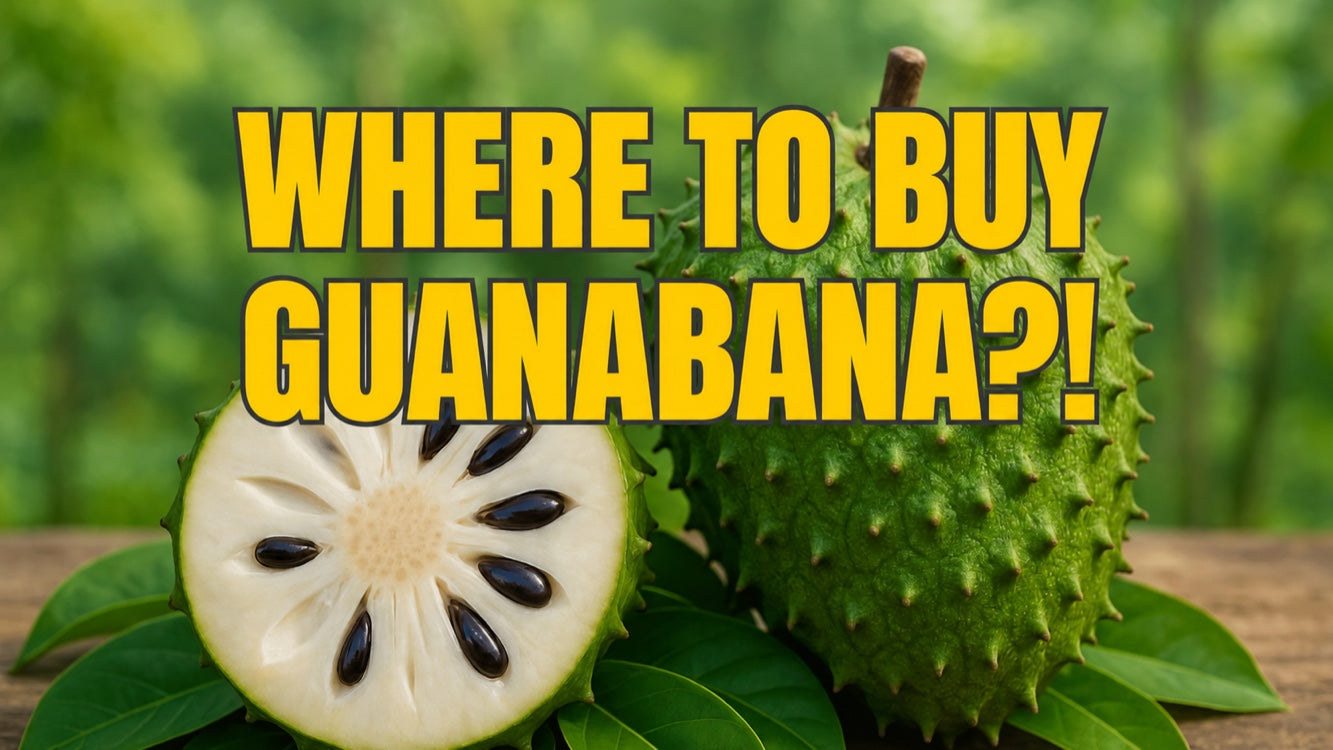
Before we look at where to buy guanabana, let’s get to know the fruit. Guanabana is a tropical fruit native to the warm, humid regions of South America and the Caribbean. It grows on the tree Annona muricata and immediately stands out: a large, heart-shaped fruit with green, spiky skin. Inside is creamy white flesh threaded with black seeds.
The name can be confusing, because guanabana is known by many different names. Depending on where you are in the world, you’ll encounter different terms. This can make the fruit harder to find. Here’s a quick overview:
| Name | Language/region |
|---|---|
| Guanabana | Spanish (Latin America) |
| Stachelannone | German |
| Soursop | English |
| Graviola | Portuguese (Brazil) |
In its native regions, guanabana has been valued for centuries not only as food, but also in traditional folk medicine. It is deeply rooted in local culture and daily life, whether as a refreshing juice on a hot day or an ingredient in a celebratory dessert.
3. Buying guanabana: your options in Germany
The direct answer to “Where can I buy guanabana?” is, unfortunately, not straightforward. Fresh fruit is a real rarity in Germany. It is easily bruised and has a short shelf life, so transporting it over long distances is very difficult and expensive. You are unlikely to find it in a regular supermarket.
But don’t worry—there are alternatives for enjoying guanabana:
🛒 Where to shop for guanabana
1. Frozen fruit pulp:
This is the most common form of guanabana available in Germany. The flesh is puréed and frozen in the countries where it is grown. You can find it in Latin American or Asian supermarkets and specialist online shops. It is ideal for juices, smoothies and desserts.
2. Guanabana leaf tea:
The plant’s dried leaves are sold as tea. It is easy to find online and offers a lovely way to discover guanabana’s mild, herbal flavour. Pay particular attention to its origin and quality.
3. Guanabana powder:
Freeze-dried fruit powder is another shelf-stable option. It can be added to smoothies, yoghurt or muesli. Look for it in health-food shops or online superfood stores.
4. Fresh fruit (if you’re lucky):
Sometimes, with a lot of luck, you may find fresh guanabana in well-stocked delicatessens or exotic-food markets in major cities. Be prepared for high prices—a single fruit can easily cost €30 to €50.
⚠️ What to look for when buying
Whichever form you choose, always check the origin and growing methods. Many products on the market are not transparent about where or how they are processed. Ideally, choose sustainably grown, fairly traded products without additives.
4. The GUYA alternative: transparent, sustainable guanabana tea
If you’re looking for a trusted, high-quality source of guanabana, I’d like to recommend our GUYA guanabana tea. We deliberately offer guanabana as dried leaves to provide an authentic, sustainably sourced product.
🌿 About GUYA and our work
At GUYA, we do more than sell products. As the founder of the company, I, Sebastian, place great importance on transparency and fairness. We work directly with Indigenous Kichwa communities in Ecuador’s Napo region. Our guanabana leaves come from traditional chakra forest gardens—a form of permaculture that protects Amazon rainforest biodiversity while providing farming families with a fair income. We regularly document our work together and local projects on our YouTube channel.
When you buy our guanabana tea, you choose a pure natural product and directly support the people who grow it. You receive 100% pure guanabana leaves, with no additives, and can be confident that your purchase makes a positive contribution.
5. Taste and uses: how to enjoy guanabana
Now that you know where to buy guanabana, you may be wondering what it tastes like and what you can make with it. Guanabana’s flavour is a real experience: an exotic symphony of sweet and slightly tangy notes. Many describe it as a blend of pineapple, strawberry and banana, with a creamy texture reminiscent of yoghurt. It’s a flavour that transports you straight to the tropics.
Preparation naturally depends on the form in which you bought guanabana:
🍹 Ways to prepare guanabana
Guanabana tea:
The easiest and most authentic way to enjoy guanabana. Pour hot water over 1–2 teaspoons of our GUYA guanabana leaves and steep for 5–10 minutes. The tea has a mild, slightly herbal flavour and is perfect for a relaxing break.
Guanabana juice or smoothie:
If you have frozen pulp, this is the classic preparation. Simply blend the pulp with water or milk (for a creamier “batido”). You can also add other fruit, such as banana or mango, to create your own tropical smoothie.
Guanabana ice cream or sorbet:
On a hot day, nothing is more refreshing. Purée the fruit pulp with a little sugar and cream or yoghurt, then freeze the mixture in an ice-cream maker. A heavenly dessert!
Get creative! Guanabana’s mild flavour pairs well with many others. Try it in desserts, as a cake filling or even in savoury sauces for an exotic touch.
6. Nutrients and traditional significance
Guanabana is not only delicious; it is also rich in valuable nutrients. The fruit is particularly known for its high content of vitamin C, an important antioxidant that supports our immune system. It also contains other vitamins and minerals, making it a nutrient-rich addition to your diet.
| Nutrient | Amount per 100 g (approx.) |
|---|---|
| Vitamin C | 20.6 mg |
| Fibre | 3.3 g |
| Potassium | 278 mg |
| Carbohydrates | 16.8 g |
In addition to vitamins and minerals, guanabana contains many bioactive plant compounds, especially so-called Annonaceous acetogenins. These are found mainly in the leaves and seeds and are the subject of numerous scientific studies. In the traditional medicine of Amazonian peoples, different parts of the plant have been used for centuries to relieve fever, pain and inflammation. Read more about scientific research on guanabana in our related articles, such as Guanabana: Does it cure cancer or cause Parkinson’s?.
7. Conclusion: finding guanabana
Searching for “buy guanabana” can lead to an exciting discovery. Although fresh fruit is hard to find in Germany, excellent alternatives such as frozen pulp or dried tea leaves can bring the unique taste of the tropics to your home. It is important to pay attention to quality, origin and sustainability.
With our GUYA guanabana tea, we offer a transparent, fair and sustainable way to enjoy guanabana. You receive a high-quality product straight from Ecuadorian forest gardens and support Kichwa communities in the region. We invite you to try this special tea and join our mission for conscious, fair trade.
8. Frequently asked questions (FAQ)
Where can I buy fresh guanabana?
Fresh guanabana is very rare in Germany. You are most likely to find it in specialist delicatessens or exotic-food markets in major cities. Frozen pulp from Latin American or Asian supermarkets is a more reliable alternative.
What is the difference between guanabana, soursop and Stachelannone?
There is no difference; they are simply different names for the same fruit (Annona muricata). Guanabana is the Spanish name, soursop the English name and Stachelannone the German name.
What does guanabana taste like?
Its unique sweet-and-tangy flavour is often described as a creamy blend of pineapple, strawberry and banana.
Can you eat guanabana seeds?
No. The black seeds in the flesh are not edible and should be removed before eating. They contain substances that can be toxic in large quantities.
Is guanabana tea a good alternative to the fruit?
Yes. Tea made from the dried leaves is a great way to discover guanabana’s mild, herbal aroma. Our GUYA guanabana tea is a sustainable, transparent option sourced directly from smallholder farmers in Ecuador.