
GABA: The comprehensive guide to effects, blood-brain barrier, and fermented foods

📋 The most important things at a glance:
- GABA function: Most important inhibitory neurotransmitter in the brain, acts like a natural "brake pedal"
- Blood-brain barrier: GABA can only overcome this barrier with difficulty/limitedly, but acts via the gut-brain axis
- Fermented foods: Natural sources of GABA from lactic acid bacteria (150-300 mg per day)
- Guayusa tea: Fermented versions offer GABA in combination with L-theanine for optimal effect
📋 Table of Contents
- What is GABA?
- How is GABA produced in the body?
- GABA and the blood-brain barrier
- The gut-brain axis and GABA
- GABA in fermented foods
- Guayusa tea: A special source of GABA
- L-Theanine and GABA: A perfect synergy
- Health benefits of GABA
- Conclusion: Use GABA naturally
- Frequently Asked Questions (FAQ)
- References
1. What is GABA?
GABA, or gamma-aminobutyric acid, is the most important inhibitory neurotransmitter in our central nervous system. As a neurotransmitter, GABA transmits chemical signals between nerve cells, acting like a natural "brake pedal" for our brain. While neurotransmitters like glutamate and dopamine have an excitatory effect and activate nerve cells, GABA has the opposite function: It reduces the excitability of nerve cells and maintains balance in the nervous system.
| function | Effect |
|---|---|
| Anxiety and stress regulation | Reduces excessive neuronal activity in fear centers of the brain |
| Sleep promotion | Supports the transition to sleep and improves sleep quality |
| Mood stabilization | Helps regulate mood swings |
| Muscle relaxation | Reduces muscle tension and supports relaxation |
| Anticonvulsant | Prevents excessive neuronal discharges |
💡 Did you know?
An imbalance in the GABA system has been linked to various conditions, including anxiety disorders, sleep disorders, epilepsy, and certain forms of depression. Interestingly, many medications, such as benzodiazepines and certain sleep aids, aim to enhance GABA activity in the brain.
2. How is GABA produced in the body?
Our bodies naturally produce GABA through a fascinating biochemical process. GABA is made from glutamate, an excitatory neurotransmitter. This conversion occurs through the enzyme glutamate decarboxylase (GAD). This enzyme catalyzes the reaction that removes a carboxyl group from glutamate, producing GABA.
🔬 The synthesis route
This process requires an important cofactor: vitamin B6 , specifically its active form pyridoxal 5'-phosphate. Without sufficient vitamin B6, GABA production can be impaired, which can lead to increased nervousness.
The chemical reaction can be represented as follows:
Glutamate + GAD + Vitamin B6 → GABA + CO₂
⚠️ Important:
A vitamin B6 deficiency can impair GABA production. This explains why vitamin B6 is often included in supplements for relaxation and stress relief—it indirectly supports GABA production in the body.
3. GABA and the blood-brain barrier
A controversial topic in GABA research is whether orally administered GABA can cross the blood-brain barrier. The blood-brain barrier (BBB) is a selective barrier that protects our brain from potentially harmful substances and also regulates the transport of nutrients and neurotransmitters. It consists of specialized endothelial cells that line the blood vessels in the brain and are closely connected by so-called "tight junctions."
🔬 The scientific controversy
Traditionally, it was believed that GABA could not cross this barrier. Studies from the 1970s by researchers such as Kuriyama and Roberts concluded that GABA is too hydrophilic to cross the lipid-rich blood-brain barrier.
However, recent research paints a more nuanced picture. Some studies suggest that small amounts of GABA may indeed be able to cross the barrier, either through specific GABA transporters, through transcytosis, or via carrier-mediated transport mechanisms.
| Transport mechanism | Description | Scientific evidence |
|---|---|---|
| GABA transporter | Specific transport systems in the BBB | Limited evidence, controversial |
| Transcytosis | Transport through endothelial cells | Some recent studies support this possibility |
| Carrier-mediated | Transport via specific proteins | Isolated evidence in animal models |
🎯 Practical implication:
Oral GABA supplements act primarily through the gut-brain axis and peripheral effects, not primarily through direct transport to the brain. This explains why GABA can be effective despite crossing the blood-brain barrier.
4. The gut-brain axis and GABA
If GABA has difficulty crossing the blood-brain barrier, how can it still be effective? The answer lies in the fascinating gut-brain axis. The gut-brain axis is a bidirectional communication system between our digestive tract and the brain. It connects the emotional and cognitive centers of the brain with peripheral intestinal functions, enabling a constant exchange of information between these two vital organ systems.
🦠 GABA-producing intestinal bacteria
What's particularly interesting is that certain intestinal bacteria can produce GABA. These GABA-producing bacteria can communicate with our nervous system through various pathways:
• Vagus nerve: The vagus nerve is a direct connection between the gut and the brain and can be activated by GABA.
• Neuroendocrine pathways: Hormones and neurotransmitters in the bloodstream can carry signals from the gut to the brain.
• Immune system: Inflammatory signals can influence brain function and are modulated by the intestinal flora.
💡 Important insight:
By promoting a healthy gut flora, especially with GABA-producing bacteria, we may be able to indirectly influence our GABA levels in the brain, even though GABA itself has difficulty crossing the blood-brain barrier. Studies have shown that the composition of our gut flora can have a significant impact on our GABA levels.
5. GABA in fermented foods
Fermented foods are an excellent natural source of GABA. During fermentation, lactic acid bacteria (LAB) convert glutamate into GABA, significantly increasing the GABA content in these foods. During fermentation, lactic acid bacteria, also known as LAB, convert glutamate into GABA. This occurs with the help of the enzyme glutamate decarboxylase (GAD), which we have already learned about.
🔬 The fermentation process and GABA production
The most important GABA-producing bacterial strains include:
• Lactobacillus plantarum
• Lactobacillus brevis
• Lactobacillus buchneri
• Streptococcus thermophilus
Optimal conditions for GABA formation: A low pH value (ideally between 4.0 and 5.0), an optimal temperature of 35-40°C, anaerobic conditions, sufficient glutamate as a substrate and vitamin B6 as a cofactor.
| Fermented food | GABA content (mg/100g) | Special features |
|---|---|---|
| GABA black tea | 182-360 | Highest content among fermented teas |
| GABA Oolong Tea | 128-286 | Balanced ratio of GABA and L-Theanine |
| Tempeh | 30-150 | Plant protein source with high GABA content |
| Miso | 50-200 | Traditional Japanese fermentation product |
| Kimchi | 20-100 | GABA content increases with fermentation time |
| kefir | 15-80 | Combination of lactic acid bacteria and yeasts |
| sauerkraut | 15-60 | Easy to make, good source of GABA |
| yogurt | 10-50 | Depending on the bacterial strain used |
🌟 Interesting:
GABA teas have by far the highest GABA content of any fermented food. One cup of GABA black tea can contain up to 360 mg of GABA—more than most other natural sources combined.
6. Guayusa tea: A special source of GABA
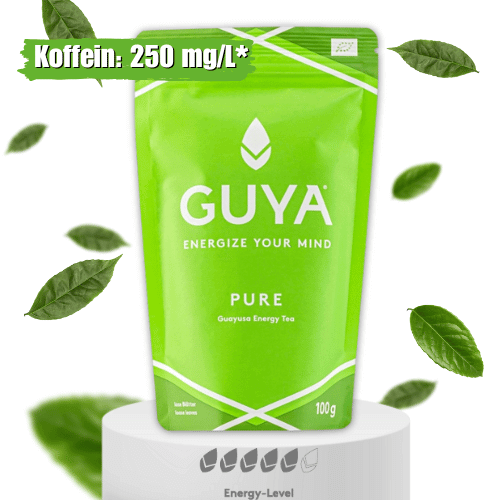
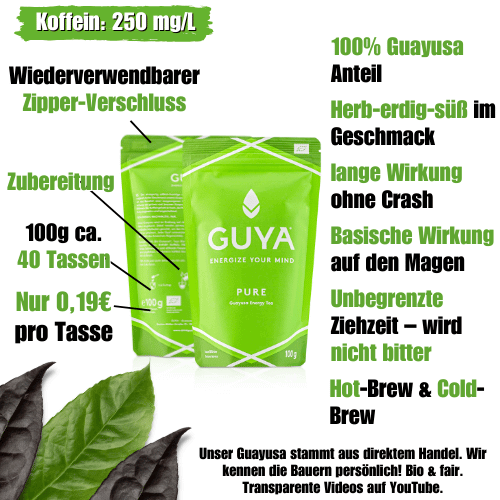
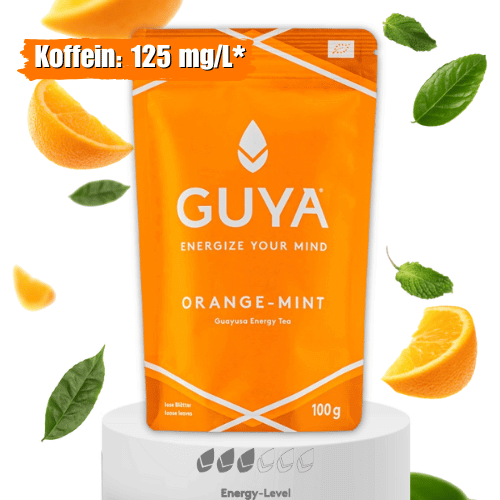
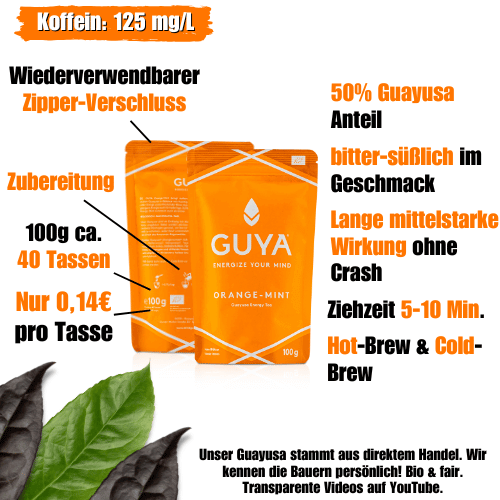
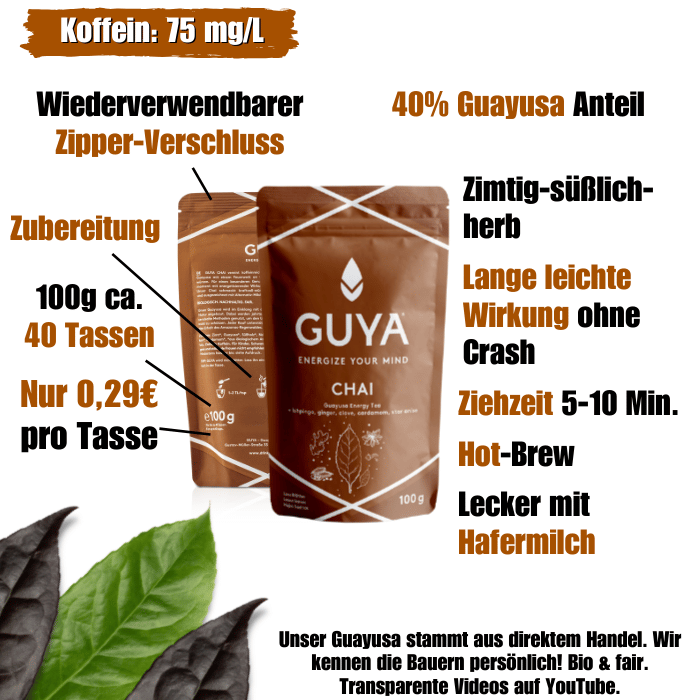
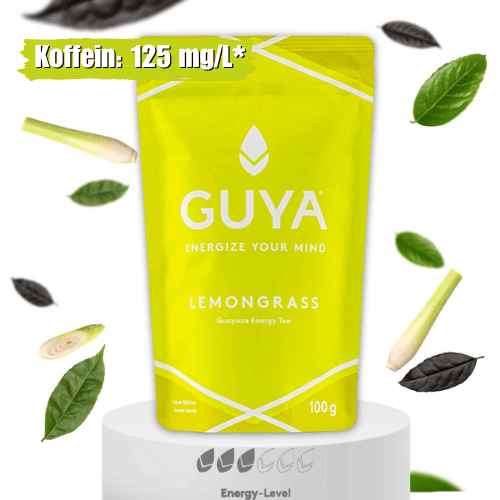
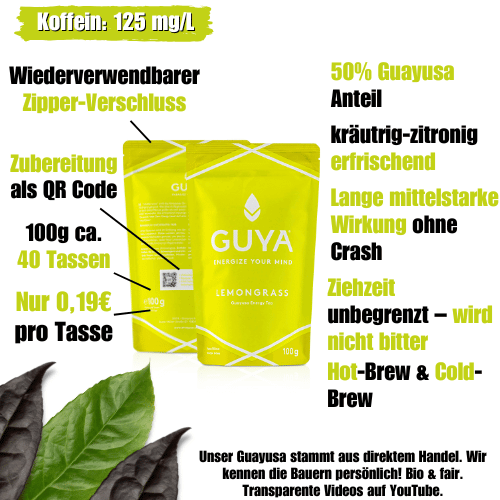
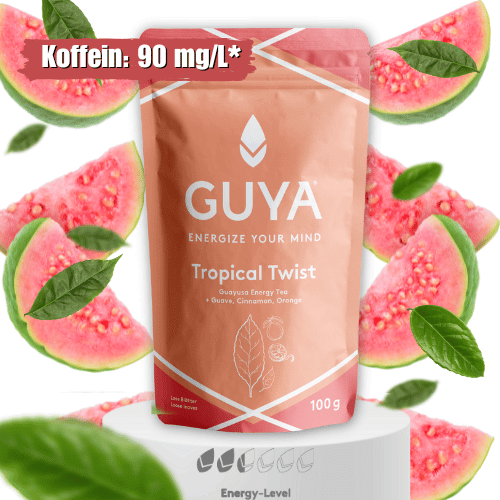
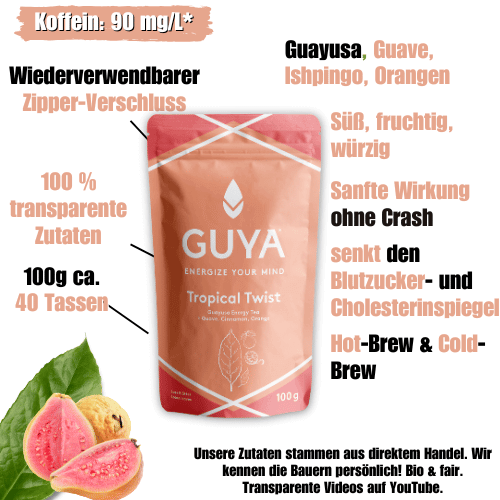
Guayusa tea, especially in its fermented form, represents a unique and particularly interesting source of GABA. While traditional guayusa is already known for its high caffeine content and stimulating properties, fermented guayusa offers a fascinating combination of energy and relaxation. The fermentation process enriches guayusa tea with GABA while retaining its natural properties.
🍵 GABA content in fermented Guayusa
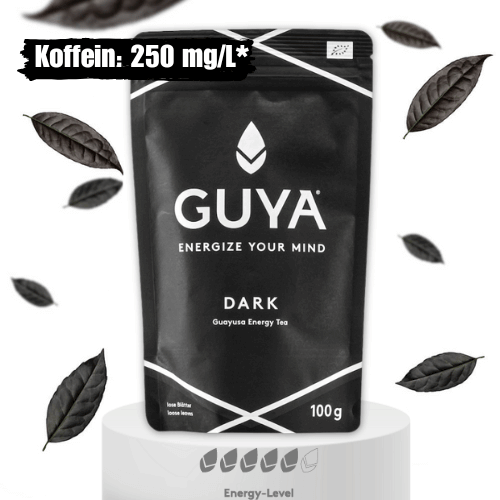
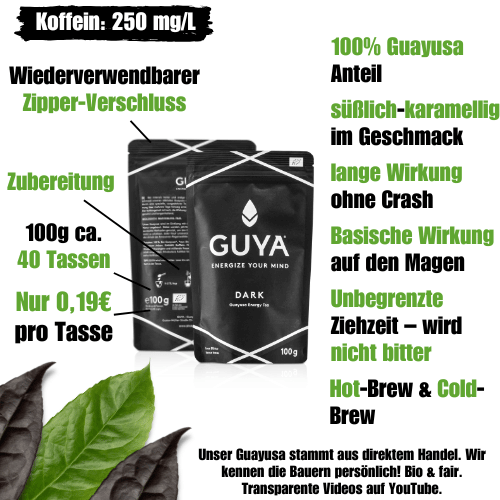
Fermented Guayusa tea (Dark) can reach a GABA content of 50-150 mg per 100g , making it a rich natural source of GABA.
Special feature: Unlike many other GABA teas, fermented Guayusa retains its characteristic caffeine content, resulting in a unique combination of alertness and relaxation.
⚡ The unique combination of active ingredients:
Fermented Guayusa combines the best of both worlds:
• Caffeine: For energy, alertness and focus
• GABA: For relaxation, stress reduction and balance
• L-Theanine: Enhances the calming effect and promotes relaxed concentration
The result: gentle, focused energy without nervousness or crashes – ideal for productive work and mental clarity.
7. L-Theanine and GABA: A perfect synergy
One of the most fascinating properties of fermented guayusa tea is the natural synergy between GABA and L-theanine. L-theanine is an amino acid found primarily in tea leaves and is known for its relaxing and focusing properties. The combination of GABA and L-theanine creates a synergistic effect that is more powerful than the sum of their individual active ingredients.
🧠 Scientifically proven synergy effects
Studies have shown that the combination of GABA and L-theanine is particularly effective:
• Improved sleep quality: The combination reduces the time it takes to fall asleep and improves NREM sleep phases significantly more than either substance alone.
• Stress reduction: L-theanine enhances the anti-anxiety effects of GABA by modulating alpha brain waves.
• Cognitive performance: While GABA promotes relaxation, L-theanine simultaneously promotes focus and concentration.
• Mood improvement: Both substances act synergistically on neurotransmitter systems that are responsible for positive mood.
🎯 Practical application:
You can consume Guayusa Dark teas regularly. The combination of GABA, L-theanine, and caffeine makes them ideal for the morning or early afternoon when you need focused energy without jitters. You can also drink Guayusa with fermented foods, where the L-theanine content enhances the effects of the GABA in the food.
8. Health Benefits of GABA
The health benefits of GABA are diverse and scientifically well-documented. From improving sleep quality to reducing stress and anxiety to supporting cognitive function, GABA plays a central role in our well-being.
💤 Sleep improvement
GABA plays a crucial role in regulating the sleep-wake cycle. Studies show that GABA shortens the time it takes to fall asleep and improves sleep quality, especially when combined with L-theanine. One study found that the combination of GABA (100 mg) and L-theanine (200 mg) reduced the time it takes to fall asleep by an average of 20 minutes and prolonged NREM sleep phases.
🧘 Stress and anxiety reduction
GABA acts as a natural anxiolytic (anxiety-reducing agent) and helps reduce excessive neuronal activity in the brain's anxiety centers. Clinical studies have shown that oral administration of GABA can reduce stress markers such as cortisol and lessen subjective feelings of anxiety. The effect typically occurs within 30-60 minutes.
🩸 Blood pressure regulation
Interestingly, GABA also has positive effects on blood pressure. Several studies have shown that regular consumption of GABA-rich foods can lead to a moderate reduction in blood pressure, especially in people with slightly elevated levels. The mechanism appears to work through activation of the parasympathetic nervous system.
| Application goal | Recommended GABA amount | Natural springs |
|---|---|---|
| Stress reduction | 50-200 mg daily | GABA tea, fermented guayusa, kimchi |
| Sleep improvement | 100-300 mg before bedtime | GABA black tea, fermented Guayusa (Dark) |
| Blood pressure regulation | 80-150 mg daily | Regular consumption of fermented foods |
| General balance | 30-100 mg daily | Combination of different fermented foods |
⚠️ Important note:
GABA supplements should not be used as a substitute for prescription medications for diagnosed mental health conditions. Always consult a physician if you have an existing condition.
9. Conclusion: Use GABA naturally
GABA is the most important inhibitory neurotransmitter in our brain and plays a central role in relaxation, sleep, and mental balance. Although GABA has difficulty crossing the blood-brain barrier, it acts via the gut-brain axis and peripheral effects. This analysis impressively demonstrates how natural GABA sources such as fermented foods and teas offer an effective and safe way to reap the benefits of this important neurotransmitter.
✅ Practical recommendations
For optimal use of GABA we recommend:
• Fermented teas: Enjoy GABA teas and fermented Guayusa tea (Dark) regularly
• Fermented foods: Incorporate kimchi, miso, tempeh, and kefir into your diet
• Support the gut-brain axis: Probiotic and prebiotic foods for a healthy intestinal flora
• Use synergy: Combine L-theanine-containing teas with GABA-rich foods
🎯 Optimal strategy:
Start with a small amount of fermented foods and increase it slowly. Observe how your body reacts and adjust the amount accordingly. The best results are usually visible after four weeks of regular use. Regularity is key: Daily consumption of moderate amounts is more effective than occasional large doses.
🌿 Experience the natural power of GABA with fermented Guayusa
Discover our premium Guayusa Dark , enriched with GABA through natural fermentation. The perfect combination of energy, focus, and relaxation – scientifically proven and traditionally proven.
10. Frequently Asked Questions (FAQ)
❓ Can I influence my GABA levels through diet?
Yes, you can positively influence your GABA levels by regularly consuming fermented foods such as GABA tea, kimchi, miso, and fermented guayusa. The effect occurs primarily via the gut-brain axis.
❓ How long does it take for GABA to work?
The acute effects of GABA from food typically occur within 30-60 minutes. For long-term effects such as improved sleep or reduced anxiety, regular intake over 3-4 weeks is recommended.
❓ Are there any side effects of consuming GABA from food?
GABA from natural sources such as fermented foods is generally very well tolerated. Very high doses may rarely cause fatigue or mild digestive discomfort.
❓ Can I combine GABA with medication?
If you are taking prescription medications, especially those that affect the nervous system, you should consult your doctor before consuming large amounts of GABA-rich foods.
❓ Is fermented guayusa tea suitable for everyone?
Fermented guayusa tea contains caffeine and is therefore not suitable for people with caffeine sensitivity, pregnant women, or children. For everyone else, it is an excellent source of GABA and L-theanine.
11. References
📚 About this article:
Scientific basis: This article is based on a comprehensive analysis of peer-reviewed GABA studies. All statements are supported by appropriate scientific sources. This information is for educational purposes and does not replace medical advice.
- Cleveland Clinic. (2023). Gamma-Aminobutyric Acid (GABA). https://my.clevelandclinic.org/health/articles/22857-gamma-aminobutyric-acid-gaba
- Boonstra, E., et al. (2015). Neurotransmitters as food supplements: the effects of GABA on brain and behavior. Frontiers in Psychology, 6, 1520. https://www.frontiersin.org/articles/10.3389/fpsyg.2015.01520/full
- Hepsomali, P., et al. (2020). Effects of oral gamma-aminobutyric acid (GABA) administration on stress and sleep in humans: A systematic review. Frontiers in Neuroscience, 14, 923. https://www.frontiersin.org/journals/neuroscience/articles/10.3389/fnins.2020.00923/full
- Carabotti, M., et al. (2015). The gut-brain axis: interactions between enteric microbiota, central and enteric nervous systems. Annals of Gastroenterology, 28(2), 203-209.https://pmc.ncbi.nlm.nih.gov/articles/PMC4367209/
- Dhakal, R., et al. (2012). Production of GABA (γ-aminobutyric acid) by microorganisms: a review. Brazilian Journal of Microbiology, 43(4), 1230-1241.https://pmc.ncbi.nlm.nih.gov/articles/PMC7037312/
- Wu, M.-C., et al. (2023). Investigation on the Quality of Commercially Available GABA Tea in Taiwan. Standards, 3(3), 297-315. https://www.mdpi.com/2305-6703/3/3/22
- Kim, S., et al. (2019). GABA and l-theanine mixture decreases sleep latency and improves NREM sleep. Pharmaceutical Biology, 57(1), 65-73. https://www.tandfonline.com/doi/abs/10.1080/13880209.2018.1557698
- Wang, L., et al. (2022). How does the tea L-theanine buffer stress and anxiety. Trends in Food Science & Technology, 119, 379-388. https://www.sciencedirect.com/science/article/pii/S2213453021001324
- Dasdelen, M.F., et al. (2022). A novel theanine complex, Mg-L-theanine improves sleep quality via regulating brain electrochemical activity. Frontiers in Nutrition, 9, 874254. https://www.frontiersin.org/journals/nutrition/articles/10.3389/fnut.2022.874254/full
- Kroes, MCW, et al. (2021). More than just caffeine: Psychopharmacology of methylxanthine interactions with plant-derived phytochemicals. Neuroscience & Biobehavioral Reviews, 120, 175-185. https://www.sciencedirect.com/science/article/pii/S0278584618301726