
GABA Effects on Body & Mind – Everything You Need to Know

GABA (gamma-aminobutyric acid) is a neurotransmitter with stress-reducing and sleep-promoting effects . Taking 100–300 mg daily as a tea or supplement will help you relax naturally — without side effects.
Table of contents
- Introduction: What is GABA?
- How does GABA work in the body?
- GABA receptors explained
- Effects of GABA on the psyche
- GABA deficiency: symptoms and causes
- GABA tea: Natural source?
- Dosage and intake
- Side effects of GABA
- FAQ – Frequently Asked Questions
- Conclusion
1. Introduction: What is GABA?
GABA – you may have heard the term, but what exactly is GABA ?
GABA stands for gamma-aminobutyric acid and is a neurotransmitter that plays a major role in your brain.
It acts as a natural sedative: GABA dampens excessive activity in the nervous system and promotes relaxation.
In this article, you'll learn all about the effects of GABA on the body and mind—from sleep to stress.
And of course, we'll cover different GABA sources that you can integrate into your daily routine to increase your GABA production.
2. How does GABA work in the body?

This question is key to understanding the GABA neurotransmitter .
As a natural messenger substance, GABA influences your nervous system – and thus your body and psyche.
Here we show you what GABA does in the body and how it controls various processes.
2.1. Gamma-aminobutyric acid
GABA is an amino acid , more specifically gamma-aminobutyric acid, which your body produces itself.
It is produced from glutamate by the enzyme GAD (glutamate decarboxylase) – a process in the brain and intestines.
Studies have shown that GABA is the most important inhibitory substance for neuronal excitability in the central nervous system – it slows down excessive activity of nerve cells.
2.2. What does GABA do in the brain?
In the brain, GABA acts like a brake pedal: it dampens overactive nerve signals.
This happens via GABA receptors , which inhibit signals and thus ensure balance – for example, in times of stress.
2.3. GABA for better sleep and sleep disorders
GABA is a sleep promoter: it calms the brain and helps you fall asleep.
Studies , for example from the scientific journal “Pharmaceutical Biology,” show that GABA shortens the time it takes to fall asleep and improves sleep quality – perfect for counteracting jet lag or stress-related restlessness.
It activates sleep centers in the brain and inhibits wakefulness signals—essential for deep rest. Furthermore, GABA, as the main inhibitor, promotes sleep by reducing neuronal overactivity.
2.4. GABA for pain
GABA can relieve pain by dampening pain signals in the spinal cord.
GABA-A receptors have been found to reduce chronic pain by calming overexcited neurons and inhibiting pain signals caused by inflammation.
2.5. Blood pressure
GABA causes your blood vessels to relax , helping to lower blood pressure .
A study shows that GABA-B receptors widen blood vessels —a process called vasodilation. Simply put, the vessels become looser, and pressure drops. This makes GABA a natural remedy for high blood pressure without the need for medication.
Tests with rats have shown that GABA noticeably lowers blood pressure because it relaxes blood vessels. Another study has shown that GABA-B receptors relax vascular muscles by blocking certain channels (calcium channels)—this was tested with a substance called baclofen.
Human research suggests that as little as 250 mg of GABA per day can slightly lower blood pressure. This is a gentle way to naturally manage mild to high blood pressure.
3. GABA receptors explained

GABA receptors are another key to understanding how GABA works.
They sit in your nervous system and turn GABA into a brake pedal for overactive signals.
In the following sections, we explain what GABA receptors are and how they control your body.
3.1. What are GABA receptors?
Dozens of studies, including those from StatPearls , PMC , MDPI , and Scielo , show that GABA receptors keep your nervous system in balance.
This is super important so that you feel calm and in control.
GABA acts like a brake in the brain: It dampens excessive activity, helps you stay relaxed, and ensures that your head doesn't spin – for example, in cases of stress or insomnia
3.2. A receptors
GABA-A receptors are the quick starters – they work directly and immediately.
They open chloride channels on the nerve cell, letting chloride in and thus stopping electrical signals.
Studies, such as those by StatPearls (2023), show that GABA-A receptors reduce pain and promote sleep by calming overexcited neurons – like a relaxation switch .
They also relieve anxiety, so they're crucial if you want to calm down and relax quickly .
Drugs such as benzodiazepines (e.g. Valium) enhance precisely this effect – GABA-A is their target.
3.3. B receptors
GABA-B receptors work slower but more sustainably.
They block calcium channels and open potassium channels, which gently reduces nerve signals.
The GABA-B receptors relax blood vessels and lower blood pressure.
They also help with anxiety and muscle relaxation – a real all-rounder in the background.
4. Effect of GABA on the psyche

The effects of GABA are impressive – it calms your mind and relaxes your body.
Stress and anxiety: GABA dampens overactivity in the brain and thus reduces stress and anxiety.
Mood: It lifts your mood by reducing stress and creating balance.
Many studies, such as those in the journal Neuropsychiatric Disease and Treatment , show that GABA can reduce stress and anxiety by acting as a natural brake in the brain.
When you're stressed, your body goes into fight-or-flight mode - your heart races, your thoughts race , and creativity does n't stand a chance.
GABA calms this overreaction by dampening neural activity, making you more relaxed. This allows your mind to break out of this state of alert and think more freely again.
It becomes particularly exciting when you consider the effect on the mind. Because less stress due to more GABA not only brings calm, but also space for creative ideas. When fear disappears, your brain is no longer solely focused on survival—it can become flexible and inventive again.
Research suggests that GABA restores balance in the mind , so you are not only calmer but also better able to solve problems and create new things .
5. GABA deficiency: symptoms and causes
A GABA deficiency can throw your body and mind out of balance – here you'll learn how to recognize it and why it occurs.
Symptoms: A deficiency is indicated by restlessness, sleep problems and more.
When GABA is lacking, your brain runs at full speed because the brakes are gone. Studies like this one from the " Journal of Clinical Psychopharmacology " show that too little GABA increases neuronal excitability, which triggers symptoms like anxiety, insomnia, muscle spasms , and even concentration problems .
Typical symptoms of GABA deficiency are: constant nervousness, difficulty falling asleep, muscle tension, irritability , and a feeling as if your head is under constant stress.
A deficiency is also associated with depressive moods and headaches .
Causes: Stress, poor diet and illness can cause a GABA deficiency.
Chronic stress is a major trigger: It depletes your GABA reserves because your body is constantly on alert. Long-term stress inhibits GABA synthesis by overloading the enzyme GAD, which converts glutamate into GABA. This leads to less GABA in the brain, making you more restless and intensifying the stress spiral.
If a poor diet is added to this, e.g. too little vitamin B6 (important for GAD) or glutamate-rich diets , then GABA production is further disrupted.
Without enough vitamin B6, GABA can't function properly. And too much glutamate in your diet makes you nervous instead of being converted into calming GABA.
Diseases such as epilepsy or autoimmune disorders can also impair GABA function. Genetic defects or inflammation can lead to less active GABA receptors. Alcohol abuse is another factor – it boosts GABA in the short term, but decreases natural production in the long term.
Environmental toxins (e.g. pesticides) and lack of sleep exacerbate the problem – they disrupt the balance in the brain.
If you know this, you are not alone – but there are ways to change it!
6. GABA tea: Natural source?

GABA tea is an easy way to boost your GABA levels.
6.1. What is GABA tea?
GABA tea is a fermented tea with increased GABA levels—a natural source of relaxation. Regular tea, like green tea, contains little GABA, but GABA tea is fermented to increase its levels.
Up to 150–200 mg can be contained in 100 g of GABA tea, significantly more than regular tea.
6.2 How does Gaba tea work?
Studies suggest that GABA from tea can calm the nervous system – similar to synthetic GABA.
A study from Frontiers in Nutrition found that GABA tea improves sleep quality and reduces stress.
In addition, the effect also depends on accompanying substances such as L-theanine. This amino acid enhances relaxation and focus, as described in our L-theanine article .
This leaves only two qualified, genuine GABA teas: fermented green tea and guayusa or dark guayusa . These two plants are the only ones in the world that naturally contain L-theanine.
Benefits and limitations: GABA tea can lower blood pressure, increase focus and alertness, and elevate mood, but the effects are gentler than those of high-dose capsules, so a generally balanced diet and a healthy lifestyle with exercise and low stress are important .
6.3 Other natural sources of GABA
In addition to GABA tea, there are other natural sources that can boost your GABA levels—here are the best options.
Fermented foods: Kimchi, kefir, and sauerkraut are rich in GABA thanks to microorganisms—a natural source of relaxation.
Fermented foods such as kimchi or kefir contain GABA because lactic acid bacteria such as Lactobacillus brevis produce it during fermentation.
- Kimchi provides 40–100 mg GABA per 100 g,
- Kefir 20–50 mg,
- Sauerkraut 20-50 mg.
They not only boost GABA, but also your intestinal flora, which supports production in the body.
Sprouted brown rice: Sprouted rice is a simple, natural source—packed with nutrients and easy to make at home.
When brown rice germinates, the enzyme GAD converts glutamate into GABA.
- Brown sprouted rice: 30–40 mg per 100 g
- Regular rice (1–5 mg).
Simply soak for 24–48 hours until sprouts appear—mild, nutty, and perfect as a side dish. It reduces stress and promotes sleep.
Vegetables and fruits: Tomatoes, peaches, etc. provide small but natural amounts of GABA – ideal for everyday life.
- Tomatoes provide 5–15 mg per 100 g,
- Pumpkin (10 mg),
- green peppers (4 mg),
- Edamame (6 mg)
- Peaches (13 mg)
The amounts are smaller than in fermented foods, but nutrients such as vitamin C make them valuable.
Shiitake mushrooms: Shiitake are a natural source of GABA with umami – soothing for your nerves and palate.
- Shiitake mushrooms provide 8–10 mg per 100 g, and even more when dried.
Their glutamate is partially converted into GABA, and antioxidants are a bonus. They're a dream in soups or stir-fries.
Herbs: St. John’s wort indirectly promotes GABA – a traditional source of balance.
St. John's wort doesn't directly contain GABA, but it does increase receptor activity. As a tea, it has a gently calming effect.
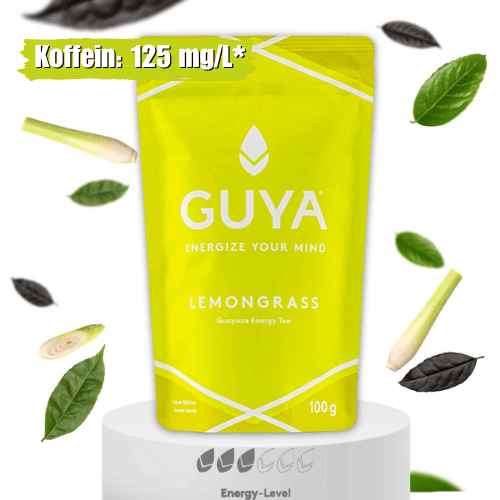
Lemongrass has a similar effect to GABA itself. The active ingredient apigenein binds to GABA receptors in the brain and produces a relaxing and anxiolytic effect.
7. Dosage and intake
The right GABA dosage depends on your goal.
You can take GABA as a tea, supplement , or food – the amount and timing determine the effect. We'll show you how to get the most out of it.
7.1. How much GABA per day?
How much you need per day varies – 100–1000 mg is typical, depending on your needs.
The dosage depends on stress, sleep and blood pressure.
Studies show that 100–300 mg before bedtime shortens the time it takes to fall asleep and promotes recovery – perfect if you're brooding at night.
For stress, 50–200 mg is often sufficient.
Higher doses, such as 500–1000 mg, are being tested for anxiety or muscle spasms , but studies warn that more than 1000 mg per day often provides no additional benefit because of the blood-brain barrier.
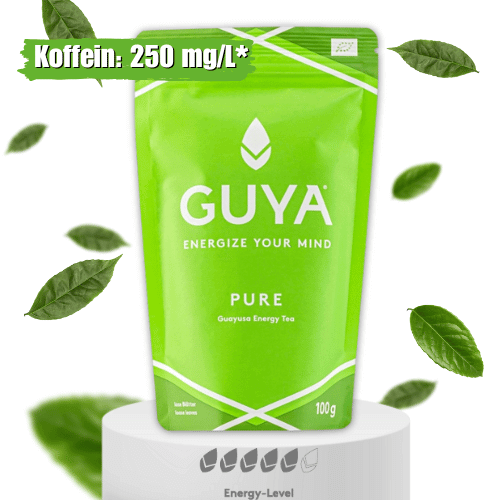
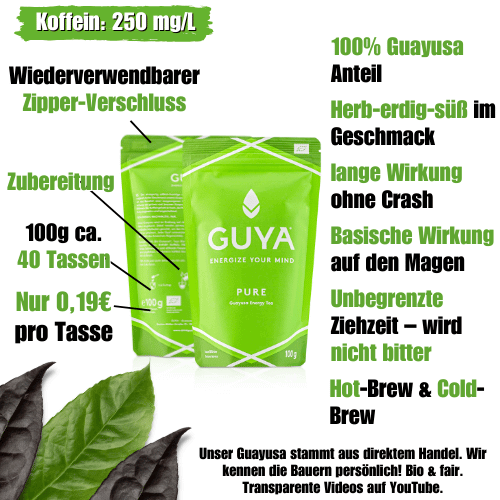
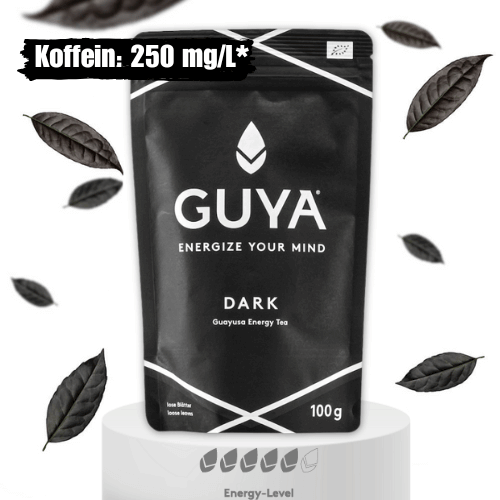
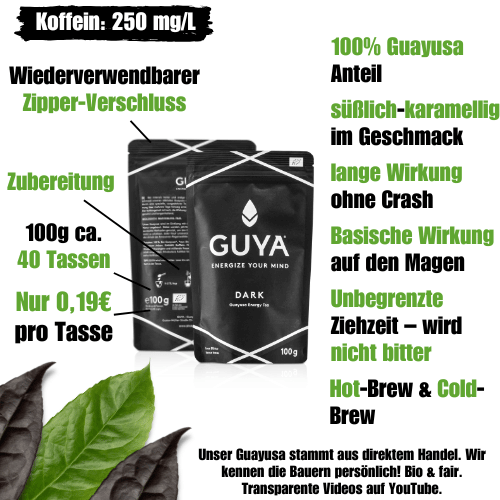
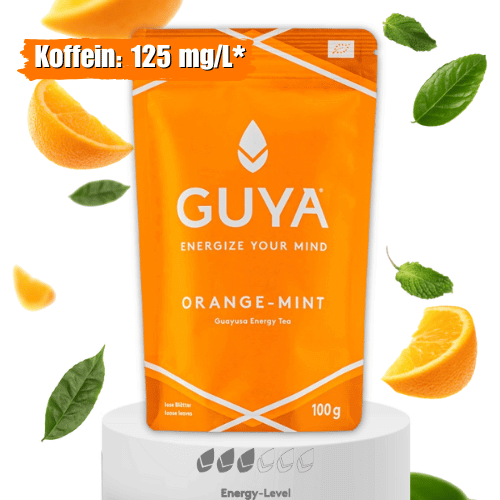
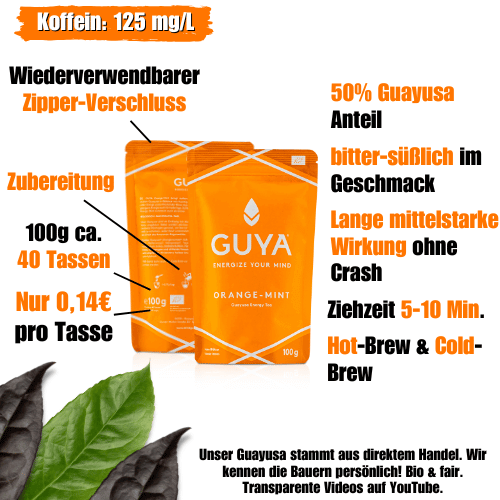
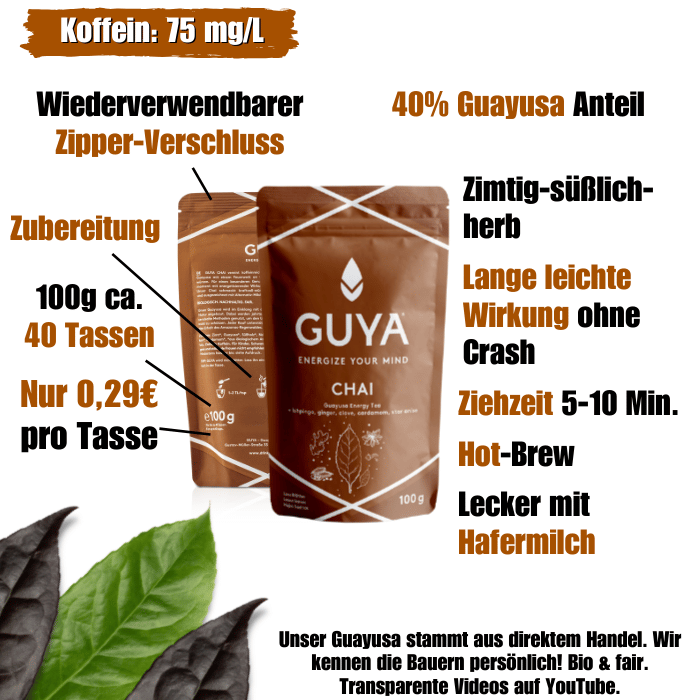
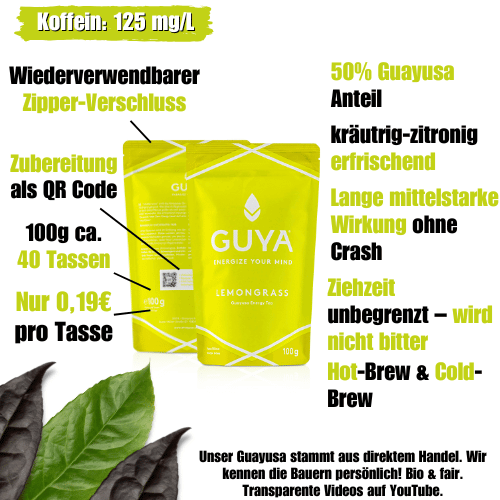
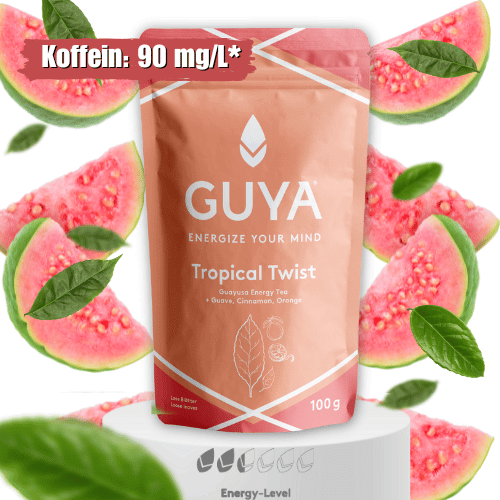
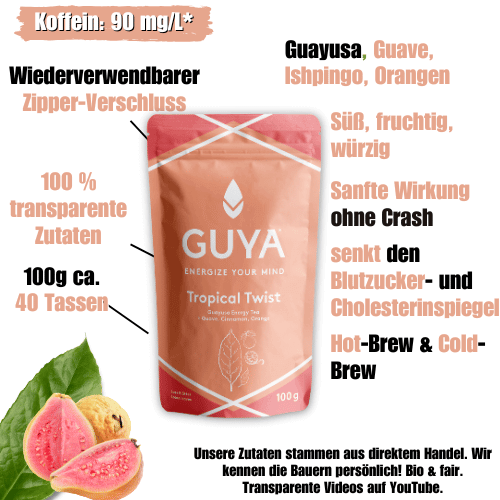
It's also important to note that your body also produces GABA itself. The better you live your life, the higher your natural GABA production will be. Choosing a stimulant that doesn't put your body into an agitated , alert state can be a good start. Guayusa Energy Tea is a natural stimulant made from the guayusa leaf . Its active ingredient complex is ideal for long-term energized, focused, creative, and alertness without ending up in a crash or being unable to fall asleep at night.
7.2. When should you take GABA?
In the evening for sleep, during the day for rest – time makes the difference.
Take GABA 30–60 minutes before bedtime —100–300 mg is sufficient if you want to optimize your sleep . 200 mg of GABA in the evening improves sleep quality without making you tired during the day.
During the day, GABA helps with stress or tension – 50–100 mg, for example, as a tea or capsule, has a gentle effect. For particularly stressful days, you can also take 250 mg first thing in the morning to slightly lower your blood pressure . Take it on an empty stomach for faster results – it takes longer after eating.
If you don't want to take artificial supplements but often suffer from high blood pressure, we recommend our articles on hibiscus and ginger. These two miracle cures can lower your blood pressure even in small daily amounts, for example, in the form of hibiscus tea and ginger tea .
Caution: Too much during the day (over 500 mg) can make you sluggish – test what works for you!
8. Side effects of GABA
GABA side effects are rare but possible – usually harmless, but there are things you should know.
Does GABA have side effects? Yes, in some cases, especially with high doses or if taken incorrectly. Here's what to look out for.
GABA is generally safe because your body produces it naturally. However, supplements can have side effects, especially if you overdo it.
The blood-brain barrier limits absorption, but high doses can still trigger reactions.
Common side effects: Fatigue, tingling , or mild nausea – usually short-term. Daytime sleepiness at 500–1000 mg is described as typical.
Rare side effects: Overdose (over 2000 mg ) may cause dizziness, stomach upset , or shortness of breath . Stay below 1000 mg, and you'll be safe.
Interactions: GABA can interact with medications such as benzodiazepines or alcohol – be careful! Combining it with sedatives increases the effect, which can lead to drowsiness or coordination problems .
Tip: Start with 100–250 mg and increase slowly to minimize risks. Side effects aren't a big deal, but listen to your body!
9. FAQ – Frequently Asked Questions
❓ What is GABA?
GABA is gamma-aminobutyric acid, a neurotransmitter that calms your nervous system.
As an amino acid, it slows down overactive signals – more on this in the introduction .
❓ How does GABA work?
How does GABA work ? It dampens nerve activity in the brain and relaxes the body—for example, during stress or sleep.
See details under How does GABA work ?
❓ What are GABA receptors?
GABA receptors are protein structures that convert GABA signals – GABA-A acts quickly, GABA-B sustainably.
Read more about this under Receptors .
❓ What is GABA tea?
GABA tea is fermented tea with up to 200 mg GABA per 100 g – natural and relaxing.
See GABA tea for details.
❓ How much GABA per day?
How much GABA per day ? 100–1000 mg, depending on your goals—100–300 mg for sleep, up to 500 mg for stress.
Details under dosage .
❓ Does GABA have side effects?
Does GABA have side effects ? Yes, but rare—drowsiness or tingling at high doses (over 500 mg).
More under side effects .
❓ What does GABA do when there is a deficiency?
Symptoms of GABA deficiency include restlessness, insomnia, cramps – your brain runs at full speed without any brakes.
See GABA deficiency .
10. Conclusion
GABA is a true all-rounder – it calms your mind and relaxes your body.
The effects of GABA can change your life: less stress, better sleep, relaxed muscles – all natural.
From GABA tea with 50–200 mg per cup to supplements with 100–1000 mg, depending on the GABA dosage , you have many options.
It works via receptors in the brain, lowering blood pressure and reducing pain – studies clearly prove this. But without GABA? Restlessness, cramps, insomnia – a deficiency is no fun. Natural sources like kimchi or sprouted rice are bonus points.
Side effects? Rare and mild if you don't overdo it. GABA is like a reset button – simple, effective, natural. Try it – for example, with our GABA tea at GUYA. Code "GABA5" gives you 5% off !