
Guava taste, effects & tea – your guide to the tropical fruit!

Guava has a fruity-sweet flavor , strengthens your immune system , and helps with diabetes . Guava tea, made from leaves or fruit, is a healthy treat with powerful effects !
Table of contents
- Introduction: The tropical fruit guava
- Guava Taste: Fruity, sweet, exotic
- Guava Effect: Health from the Tropical Fruit
- Guava tea and leaves: A healthy treat
- Sustainable cultivation: Guava from the Amazon
- Frequently asked questions about guava
- Conclusion: Guava for enjoyment and health
1. Introduction: The tropical fruit guava
Summary: Guava is an exotic fruit with a fruity-sweet taste and powerful effects – it strengthens your immune system, helps with diabetes , and makes tea a healthy treat.
Do you love tropical fruits and are looking for a healthy kick? Then guava is exactly what you need! This fruit, also known as "guayaba," originates from Central and South America and delights with its unique flavor: sweet and sour, juicy, with hints of strawberry and pear.
But guava is more than just delicious—it's a health booster. Its leaves and fruits are traditionally used medicinally , and as a tea, it's a true all-rounder. In this guide , you'll learn everything about the flavor of guava , its effects on the immune system, diabetes , and digestion, and how you can enjoy it as a tea.
2. Guava Taste: Fruity, sweet, exotic

Summary: Guava tastes like a mix of strawberry, pear , and lemon — juicy, sweet and sour , and perfect for tea.
Guava is a taste experience that will transport you straight to the tropics. The fruit, which can be green, yellow, or pink depending on the variety, has juicy, soft flesh with a sweet and sour flavor. Many describe the taste as a cross between strawberry and pear, with a light citrus note that adds freshness. The peel is edible and slightly bitter, while the small seeds add a crunchy bite.
Guava leaves , often used for tea, have a mild, slightly bitter flavor reminiscent of herbal tea. When combined with the fruit—as in traditional Ecuadorian blends—they create a fruity-sweet tea with an exotic character.
The combination with cinnamon or orange peel is particularly popular, rounding out the flavor. Guava is so versatile that it's delicious both on its own and in beverages like tea or smoothies.
3. Guava Effect: Health from the Tropical Fruit

Summary: Guava strengthens your immune system , helps with diabetes and supports digestion – a fruit with powerful effects.
Guava is not only delicious but also a health miracle. Its fruits and leaves are packed with nutrients and active ingredients that support your body in a variety of ways.
Here are the key benefits, scientifically based.
3.1 Vitamins and the immune system
Guava is a vitamin C giant: one fruit (approx. 100 g) provides up to 228 mg of vitamin C – that's four times as much as an orange!
Vitamin C strengthens the immune system by boosting the production of white blood cells that fight infections. And studies show that this isn't just a household remedy myth; it's actually quite powerful.
Vitamin C also has antioxidant properties, protects cells from damage, and promotes skin health by supporting collagen formation. This, too, has been studied and confirmed many times.
Guava also contains vitamin A (beta-carotene) , which strengthens mucous membranes —your first line of defense against colds. Its leaves are rich in flavonoids, which studies have shown to have antibacterial properties and further support the immune system .
Guava is a natural protective shield, perfect for the cold season.
3.2 Blood sugar and diabetes
Guava is an insider tip for diabetics. Its leaves contain polyphenols and flavonoids that regulate blood sugar levels.
A study published in Nutrition & Metabolism shows that guava leaf extracts inhibit enzymes that convert carbohydrates into sugar and improve insulin sensitivity. The result: stable blood sugar levels with fewer fluctuations.
The fruit itself has a low glycemic index (GI) because it is rich in fiber (approximately 5 g per 100 g). Fiber slows sugar absorption, preventing blood sugar spikes. Furthermore, the flavonoids in guava lower cholesterol levels, which protects the cardiovascular system —a common problem in diabetes.
3.3 Digestion and antibacterial effect
Guava naturally supports your digestion . The fiber in the fruit promotes bowel movement and helps with constipation, while the leaves have traditionally been used to treat gastrointestinal discomfort . Several studies show that guava leaves have antibacterial properties that work against diarrhea -causing bacteria like E. coli.
The leaves also contain tannins, which have an anti-inflammatory effect on the intestines and can relieve cramps . In traditional Ecuadorian medicine, guava tea is often drunk for bloating or stomach irritation —a gentle, natural solution for your stomach.
4. Guava tea and leaves: A healthy treat
Guava is not only a hit as a fruit – its leaves and fruits also make a good tea.
In Ecuador, guava tea, often combined with other tropical plants, is a traditional drink that combines health and pleasure .
Here you can learn how guava tea works and how you can use it.
4.1 Effect of the leaves
Guava leaves are a treasure of natural medicine. They contain flavonoids, tannins , and essential oils that have a wide range of effects.
Guava leaf tea lowers blood sugar levels by slowing glucose absorption in the intestines—ideal for diabetics. The tannins have anti-inflammatory effects and support digestion, while flavonoids have antibacterial properties that fight intestinal infections.
Guava leaf tea is also rich in antioxidants that strengthen the immune system. In traditional Ecuadorian medicine, it is used for colds, diarrhea , and skin problems —the leaves can even be used externally as a compress for inflammation.
Its taste is mild and slightly bitter, which makes the tea a pleasant companion.
4.2 Tea from the fruit
Guava tea is a fruity delight that harnesses the fruit's health benefits . The fruit is dried and combined with other ingredients such as cinnamon or orange peel to intensify the flavor.
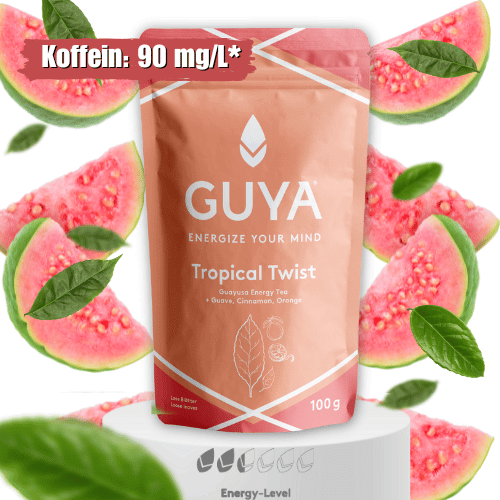
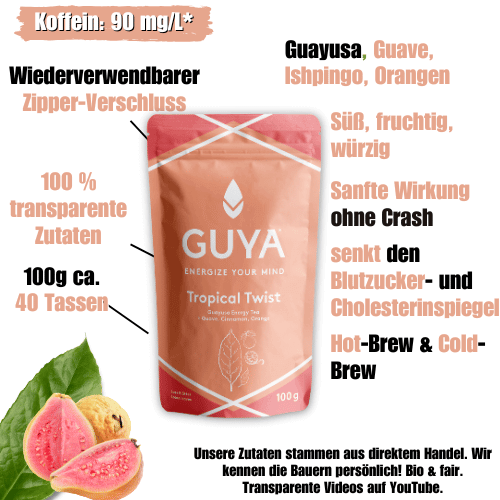
One example is the Ecuadorian blend "Tisana," which combines guava, guayusa , cinnamon leaves , and orange peel —as in our Tropical Twist . The tea tastes sweet and sour with a hint of cinnamon and is also a hit as an iced tea .
Guava fruit tea provides vitamin C and fiber, which support the immune system and digestion. It has less caffeine than pure guayusa tea, but is invigorating thanks to the fruit's natural sweetness and essential oils. Perfect for a refreshing, healthy treat.
5. Sustainable cultivation: Guava from the Amazon
Summary: Guava from Amazon forest gardens is sustainable, supports smallholder farmers , and protects biodiversity.
Our guava at GUYA comes from the forest gardens (chakras) of indigenous smallholder families in the Amazon of Ecuador, such as the Kichwa .
It grows in permaculture alongside plants such as cacao, lemongrass , macambo , hibiscus , vanilla , and ishpingo . This method protects the rainforest's biodiversity and fertile soils , which would quickly be depleted in monocultures.
Cultivation in forest gardens is not only environmentally friendly but also socially sustainable. This cultivation method provides the Kichwa with an important source of income, preserves their traditional ways of life , and protects the Amazon. Learn more in our article about the Sello Chakra certification , which emerged from an indigenous initiative as an alternative to/against organic and fair trade .
6. Frequently asked questions about guava
Do you have any questions about guava ?
Here we answer the most common questions – scientifically sound and practical.
❓ What does guava taste like?
Guava has a sweet and sour flavor , like a blend of strawberry, pear , and lemon . The tea leaves are mild and slightly tart, perfect for fruity blends. You can find detailed information in section 2. Guava Flavor: Fruity, Sweet, Exotic .
❓ How does guava work for diabetes ?
Guava leaves lower blood sugar by slowing glucose absorption and improving insulin sensitivity . The fruit has a low glycemic index . Detailed information can be found in section 3.2 Blood Sugar and Diabetes .
❓ What makes guava leaf tea so healthy?
Guava leaves contain flavonoids and tannins , which lower blood sugar , promote digestion , and have antibacterial properties. They also strengthen the immune system . Learn more in the article under section 4.1 Effects of the leaves .
❓ How do I prepare guava tea ?
Boil dried guava leaves or fruit with water (1–2 teaspoons per 400 ml, steep for 5–10 minutes). Combine with cinnamon or orange for added flavor. Learn more in section 4.2 "Fruit Tea" in this article.
❓ Where does sustainable guava come from?
Sustainable guava comes from Amazon forest gardens , such as those of the Kichwa in Ecuador. It grows in permaculture systems that protect biodiversity . Detailed information can be found in section 5. Sustainable cultivation: Guava from the Amazon .
7. Conclusion: Guava for enjoyment and health
Summary: Guava is a tropical all-rounder: fruity-sweet taste, strong effect on the immune system, blood sugar and digestion – and a healthy treat as a tea.
Guava is more than an exotic fruit—it's a health booster with flavor. Its fruity-sweet, slightly tart taste makes it a delight, while its nutrients strengthen your immune system, regulate blood sugar , and promote digestion.
As a tea made from leaves or fruit, it brings these benefits into your everyday life—whether pure or in blends like the Ecuadorian " Tisana Tea ." Sustainably grown in Amazon forest gardens, guava also contributes to environmental protection.