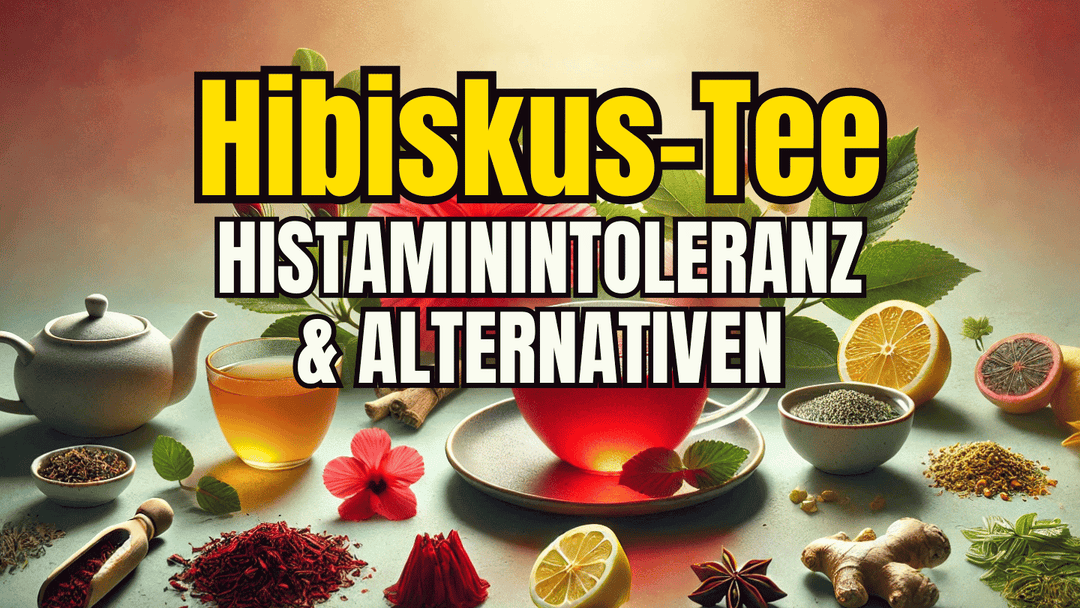

Hibiscus tea & blood pressure: Naturally lowers blood pressure?

1. Introduction: Does hibiscus tea really lower blood pressure?
Hibiscus tea has been known for centuries for its health benefits—especially when it comes to the cardiovascular system. But can hibiscus tea really help lower blood pressure? A growing number of studies show that hibiscus could be a natural alternative to support healthy blood pressure. Thanks to its phytochemicals such as anthocyanins and flavonoids, hibiscus tea could help relax blood vessels and naturally regulate blood pressure.
But how exactly does hibiscus tea work in the body? What scientific evidence is there on this? And how much should you drink daily to achieve an effect? In this article, you'll learn everything about the blood pressure-lowering effects of hibiscus tea, its correct use, and potential risks. You can find an overview of further articles on hibiscus here .
Table of contents
- Introduction: Does hibiscus tea really lower blood pressure?
- How hibiscus tea affects blood pressure
- Hibiscus tea in practice
- Risks & Side Effects
- Conclusion: Is hibiscus tea a natural alternative for high blood pressure?
2. How hibiscus tea affects blood pressure
Hibiscus tea is often recommended as a natural aid for high blood pressure—but what's the truth behind it? Its blood pressure-lowering effect is primarily attributed to its high levels of polyphenols, anthocyanins, and flavonoids .
These plant compounds have been shown to have a relaxing effect on blood vessels and can improve arterial elasticity . Studies have shown that regular consumption of hibiscus tea can significantly lower systolic and diastolic blood pressure— comparable to some blood pressure-lowering medications.
But how exactly does it work? The tea acts as a natural ACE inhibitor (angiotensin-converting enzyme inhibitor) by blocking the enzyme responsible for constricting blood vessels. This can improve blood flow , reduce pressure on the arteries, and lower blood pressure. People with mild to moderate high blood pressure could especially benefit from this effect without having to resort to chemical medications.

2.1. Which ingredients are responsible for the blood pressure lowering effect
Hibiscus tea owes its blood pressure-lowering effect to a combination of secondary plant substances that have a positive effect on the cardiovascular system. Particularly important are anthocyanins, flavonoids , and polyphenols, which act as natural antioxidants.
- Anthocyanins: These plant pigments give hibiscus tea its deep red color and have vasodilating properties.
- Flavonoids: These antioxidants act as natural ACE inhibitors and can lower blood pressure.
- Polyphenols: They reduce oxidative stress in the arteries and contribute to improving vascular function.
- Vitamin C: Strengthens the immune system and, in combination with other antioxidants, can regulate blood pressure.
The combination of these active ingredients gives hibiscus tea a natural blood pressure-lowering effect – especially when consumed regularly.
2.2. Hibiscus tea and high blood pressure: What does science say?
A growing number of scientific studies show that hibiscus tea can have a significant blood pressure-lowering effect . Significant improvements have been observed in various studies, particularly in people with mild to moderate hypertension. A meta-analysis of several clinical studies found that regular consumption of hibiscus tea can reduce systolic blood pressure by an average of 7.5 mmHg and diastolic blood pressure by 3.5 mmHg .
- Study 1: A randomized, placebo-controlled trial with 65 participants showed that daily consumption of hibiscus tea for six weeks reduced systolic blood pressure by an average of 7.2 mmHg.
- Study 2: A study of patients with pre-hypotensive blood pressure found that three cups of hibiscus tea per day had a similar effect to mild blood pressure lowering medication ( source ).
- Study 3: Another clinical meta-analysis examined 5 studies with a total of 390 participants and concluded that hibiscus tea significantly lowers blood pressure, especially in people with hypertension.
In comparison , ACE inhibitors such as lisinopril, a common blood pressure-lowering medication, are often used to treat hypertension. A clinical study compared the effects of hibiscus tea with lisinopril (10 mg daily) and found that lisinopril reduced systolic blood pressure by 8.0–10.0 mmHg and diastolic blood pressure by 5.0–7.0 mmHg. The difference from the effect of hibiscus tea was relatively small .
This shows that hibiscus tea could be a natural alternative for people who want to regulate moderate blood pressure increases without medication.
2.3. How much hibiscus tea should you drink daily?
The correct dosage of hibiscus tea depends on various factors, including individual health and desired results. Scientific studies show that 2 to 3 cups daily (approximately 500–750 ml) are sufficient to achieve a measurable reduction in blood pressure . Some studies have observed an even greater effect with 3 to 4 cups per day.
- Mild hypertension: 2–3 cups daily (approx. 500 ml)
- Moderate hypertension: 3–4 cups daily (approx. 750 ml – 1 L)
- For general heart health: 1–2 cups daily
It's important to consume hibiscus tea regularly to achieve the best results. Most long-term studies have observed significant improvements after a period of 4 to 6 weeks . To achieve its full effect, the tea should ideally be consumed unsweetened and freshly brewed.
However, not all hibiscus teas are equally effective. In the next section, you'll learn which varieties are particularly effective and what to look for when purchasing.
3. Hibiscus tea in practice
Proper preparation, choosing the best hibiscus tea varieties, and possible combinations with other herbs play a crucial role in its effect on blood pressure. In the following sections, you'll learn how to get the most out of hibiscus tea, which varieties are most effective, and which herbs can support its blood pressure-lowering effect.

3.1. Prepare hibiscus tea correctly for optimal effect
Preparation plays a crucial role in maximizing the blood pressure-lowering properties of hibiscus tea. The correct brewing time, water temperature, and dosage ensure that as many polyphenols, anthocyanins, and flavonoids as possible are extracted. Scientific studies show that a brewing time of 5 to 10 minutes is ideal for dissolving the maximum amount of secondary plant compounds into the tea.
- Water temperature: 90–95 °C (do not boil water to protect sensitive ingredients)
- Dosage: 1–2 teaspoons of dried hibiscus flowers per cup (250 ml)
- Infusion time: 5–10 minutes for maximum extraction of the active ingredients
- Drinking temperature: Can be consumed hot or as a chilled iced tea
For a particularly intense effect, hibiscus tea can also be prepared as a cold brew . In this method, the dried flowers are steeped in cold water for 8–12 hours . Studies show that this method can release an even higher concentration of antioxidants , as no heat-sensitive compounds are lost.
You can find further preparations, recipe ideas and important things to look out for when buying hibiscus in our headline article .
3.2. Which types of hibiscus tea are most effective?
Not every hibiscus tea has the same blood pressure-lowering effect—the quality of the flowers, their origin , and their processing are crucial . High-quality organic hibiscus flowers contain particularly high levels of anthocyanins and flavonoids, which are responsible for their effect.
This topic has now also reached the scientific community. Studies show that organically grown hibiscus flowers contain higher amounts of secondary plant substances than conventionally grown flowers.
- Whole hibiscus flowers (organic quality): Contain a high concentration of effective polyphenols and are ideal for tea.
- Whole hibiscus flowers (permaculture): Permaculture products contain the highest levels of nutrients. Our hibiscus tea comes from Amazon forest gardens.
- Hibiscus tea bags: Convenient, but often inferior quality with fewer active ingredients.
- Hibiscus powder: Very concentrated and ideal for smoothies or as an ingredient in drinks.
- Flor de Jamaica: A Mexican variety with a particularly high anthocyanin content. We use this variety at GUYA for our hibiscus tea .
For maximum blood pressure-lowering effect , it is recommended to use loose organic hibiscus flowers (preferably even from permaculture) , as these contain a higher concentration of valuable ingredients than industrially processed tea bags.
3.3. Combine hibiscus tea with other blood pressure-lowering herbs
By combining hibiscus with other medicinal herbs, you can further enhance its effects. Herbs that also have vasodilating, relaxing, or diuretic effects are particularly effective. This is where science comes into play again. It has been found that certain plant compounds can have synergistic effects, regulating blood pressure even more effectively.
- Lemongrass: Promotes circulation and has a calming effect on the nervous system. Try our lemongrass tea from Amazon forest gardens, for example. More information about lemongrass can be found here .
- Green tea: Contains catechins, which improve blood vessel elasticity. Learn more about the health benefits of green tea here .
- Hawthorn: Traditionally used to strengthen the heart.
- Nettle: Has a diuretic effect and reduces water retention.
- Ginger: Promotes blood circulation and supports blood vessels. Try our particularly intense Amazon ginger , for example.
- Guayusa: Pure Guayusa tea positively regulates blood pressure.
A combination of hibiscus, lemongrass , and ginger, for example, makes a particularly effective tea for the cardiovascular system. If you want to round out the flavor, you can also add a little lemon or honey.
4. Risks & Side Effects
Although hibiscus tea offers many health benefits, there are some points to keep in mind. In certain situations, consumption can have undesirable effects , especially when consumed in excess or in combination with certain medications. Scientific studies indicate that hibiscus tea can significantly lower blood pressure, which could be problematic for people with already low blood pressure. There are also possible interactions with medications, particularly antihypertensive and blood sugar-lowering medications.
In the following sections, you will learn when caution is advised, which medications may interact with hibiscus tea, and which groups of people should limit consumption.

4.1. When should one be cautious with hibiscus tea?
Certain groups of people should limit consumption or seek medical advice beforehand. Scientific studies show that hibiscus can potentially significantly lower blood pressure, influence hormone levels, and interact with certain medications.
- People with low blood pressure: Hibiscus tea can further lower blood pressure and thus cause dizziness or circulatory problems.
- Pregnant and breastfeeding women: Due to its possible hormonal effects, hibiscus should be consumed with caution during pregnancy and breastfeeding ( source ).
- Diabetics: Hibiscus can lower blood sugar levels, which, when combined with blood sugar-lowering medications, can lead to hypoglycemia.
- People with hormonal disorders: Studies suggest that hibiscus extract may affect estrogen levels ( source ).
If you belong to one of these groups or take medication regularly, you should consult a doctor before consuming hibiscus tea.
4.2. Hibiscus tea & medications: interactions
Hibiscus tea can interact with certain medications, increasing or decreasing their effects. Caution is especially advised for people who regularly take blood pressure-lowering, blood sugar-lowering, or hormonal medications. This is because the flavonoids and anthocyanins contained in hibiscus can interfere with enzymatic processes in the liver responsible for the breakdown of many medications.
- Blood pressure lowering medications (e.g. ACE inhibitors, beta-blockers): Hibiscus can further lower blood pressure and, when combined with medications, can lead to dizziness or circulatory problems.
- Blood sugar lowering medications (e.g., metformin, insulin): Hibiscus can increase the blood sugar lowering effect, thereby increasing the risk of hypoglycemia ( source ).
- Hormonal medications (e.g., birth control pills, hormone therapies): Studies suggest that hibiscus may have an estrogenic effect, which can affect the effectiveness of hormonal medications ( source ).
- Liver medications: Because hibiscus can affect certain liver enzymes, the effects of medications used to detoxify the liver or lower cholesterol may be altered.
5. Conclusion: Is hibiscus tea a natural alternative for high blood pressure?
Hibiscus tea has proven its blood pressure-lowering effect in numerous scientific studies . Thanks to its valuable components such as anthocyanins, flavonoids, and polyphenols, hibiscus can naturally help regulate blood pressure and support vascular health . People with mild to moderate high blood pressure could particularly benefit from regular consumption.
Proper preparation, dosage, and quality of the tea play a crucial role. Organic hibiscus flowers in loose form contain the highest concentration of effective plant compounds. Furthermore, the effect can be optimized by combining it with other blood pressure-lowering herbs such as lemongrass or hawthorn .
Despite its many benefits, caution is advised: Hibiscus tea can interact with certain medications and is not suitable for all groups of people. Those who regularly take blood pressure or blood sugar-lowering medication should seek medical advice before consuming it.
In summary, hibiscus tea is a promising natural treatment for high blood pressure —although always consult a doctor or naturopath. Those looking to regulate their blood pressure naturally will find hibiscus a tasty and effective option.