
Caffeine alternatives compared – Guayusa, Mate and more

Caffeine alternatives like guayusa, mate, or guarana provide natural energy. Guayusa caffeine has a gentle effect, mate has an intense effect, and guarana has a strong effect. One to two cups a day will give you a lasting and varied boost to your day!
Table of contents
- Caffeine alternatives: Natural energy without coffee
- What are Guayusa, Mate and Co.
- Differences in effect
- Taste: Which alternative suits you
- Sustainability: How environmentally friendly are they
- Frequently asked questions about caffeine alternatives
- Conclusion: The best caffeine alternative for you
1. Caffeine Alternatives: Natural Energy Without Coffee
Are you looking for caffeine alternatives that will invigorate you without coffee?
Guayusa, mate and other natural stimulants provide energy without the typical side effects such as nervousness.
In this comparison we show you differences in effectiveness , taste and sustainability .
From Guayusa caffeine with gentle power to Mate with an intense kick – find your perfect alternative!
2. What are Guayusa, Mate and Co.

There are many caffeine alternatives that provide natural energy.
Here we introduce you to Guayusa, Mate, and five other options – with their origins and special features.
2.1. Guayusa: The gentle stimulant
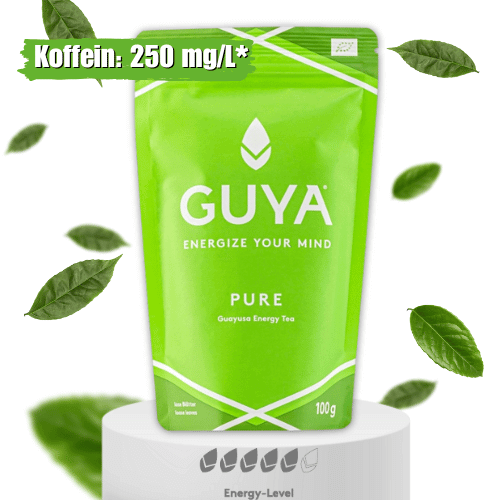
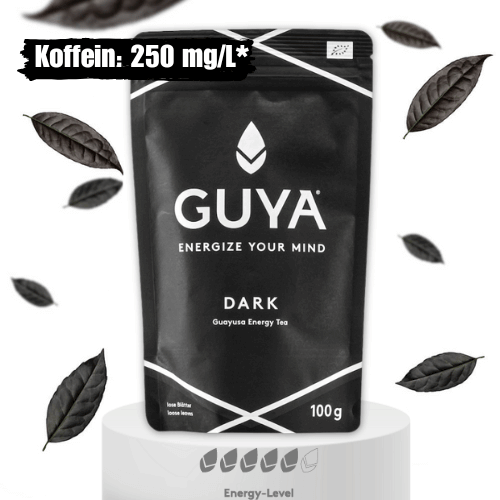
Guayusa comes from the Amazon region of Ecuador and has been used by the Kichwa for thousands of years.
The leaves are grown in permaculture forest gardens – sustainably and without pesticides.
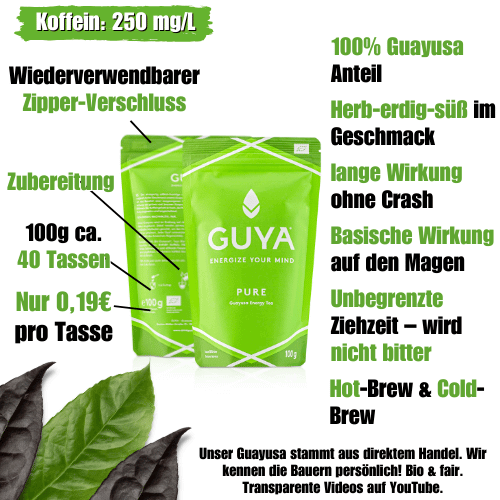
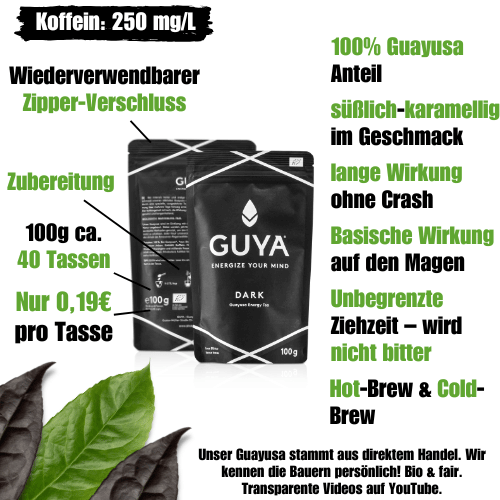
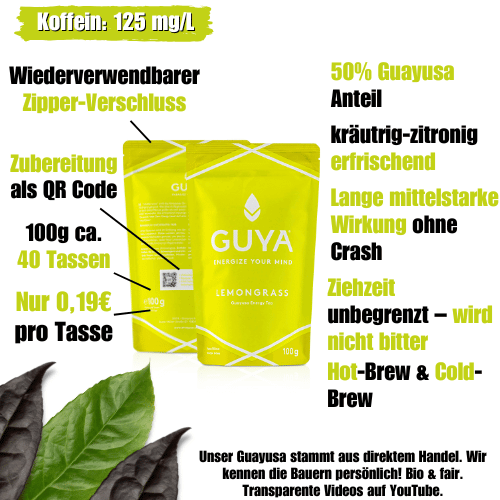
Guayusa Caffeine has a gentle, focusing, long-lasting, awakening, and performance-enhancing effect thanks to L-theanine, theobromine, and theophylline, as well as twice as many antioxidants as green tea – perfect for long-lasting energy.
Guayusa is also called "The Nightwatchman." It is the most caffeine-rich leaf in the world, yet it has a more pleasant wake-up effect than other stimulants.
2.2. Mate: The powerful classic
Yerba Mate comes from South America and was popular among indigenous peoples such as the Mawé.
Today it is mostly grown in plantations, often associated with rainforest deforestation.
The tea is an intense stimulant with a traditional ritual. Unfortunately, it is often dried over fire, which can lead to carcinogenic ingredients. The effect is rapid and intense, but less focused. Heart palpitations can occur.
2.3. Guarana: Energy from the Amazon
Guarana grows in the Amazon and was worshipped by the Mawé as the “eye of the gods.”
The seeds contain up to 7% caffeine – more than coffee – and are often processed into powder.
It is mainly used in energy drinks, but on its own it is very bitter and rather inedible.
2.4. Coffee: The worldwide favorite
Coffee originated in Ethiopia (900 AD) and conquered Europe in the 17th century.
Arabica is mostly grown on plantations, often with ecological consequences. Arabaica, on the other hand, is increasingly grown in mixed crops or even in permaculture.
A classic with a quick but short effect.
2.5. Green tea: tradition and gentleness
Green tea (Camellia sinensis) dates back to 2737 BC – the oldest caffeine beverage.
It is often harvested in monocultures, but high-quality varieties are also grown wild.
The effect is mild and meditative, thanks to L-theanine. It's often perceived as too meditative and not energizing enough.
2.6. Kola Nut: Power from Africa
The kola nut originates from West Africa and was used as a medicine and cultural asset there.
It contains 2–3.5% caffeine and is chewed or powdered.
A strong energizer with a sweet aftertaste.
2.7. Cascara: The Coffee Cherry Tea
Cascara is the dried coffee cherry (skin of the coffee bean), known in Ethiopia and Yemen.
The tea has little caffeine (0.5–1.3%) but many antioxidants.
A light, fruity pick-me-up.
For an in-depth look at the most popular stimulants worldwide, you can also download our stimulant comparison for free .
3. Differences in effect

The caffeine alternatives differ greatly in their effects.
Here we compare how Guayusa, Mate, and others revitalize your body and mind.
3.1. Guayusa Caffeine: Gentle and long-lasting
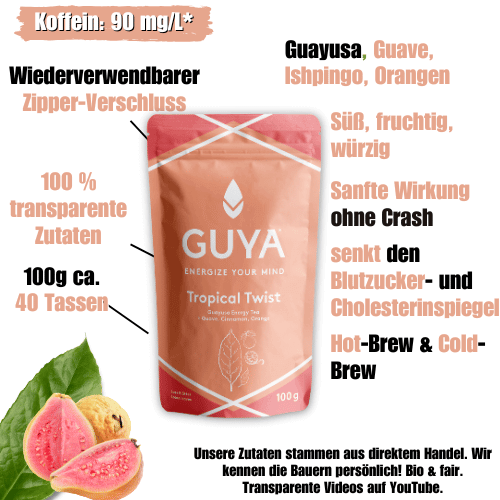
Guayusa caffeine (40–90 mg/cup) has a gentle and consistent effect. The leaves can contain up to 7.6% caffeine.
L-Theanine increases energy and focus without nervousness.
Despite its high caffeine content, Guayusa is ideal for focused work, endurance sports, and long days.
Guayusa also contains theophylline, which increases oxygen uptake in the body, and theobromine, which keeps you awake for a long time.
3.2. Mate Caffeine: Fast and intense
Mate contains about 1.4% caffeine – similar to Arabica coffee – with a fast effect.
Its effect is perfect for short, powerful boosts.
3.3. Guarana Caffeine: Strong and lasting
Guarana has 2–7% caffeine and is powerful.
The slow release of tannins provides sustained energy.
Good for endurance and weight control, but can still cause heart palpitations and jitteriness.
3.4. Coffee Caffeine: Sudden and short
Coffee (1.4–3%) provides a quick “push” – often with a crash after 1–2 hours.
A classic for morning grouches. Unfortunately, the caffeine acid has an adverse effect on the stomach, which is why coffee drinkers often experience problems with their anus and eventually switch to alternatives.
3.5. Green tea caffeine: mild and meditative
Green tea (0.9–5%) offers a mild, meditative effect thanks to L-theanine.
Ideal for calm energy. Choose the right green tea variety. Check out our tea comparison here.
3.6. Kola Nut Caffeine: Stimulating and versatile
Kola nut (2–3.5%) combines caffeine with theobromine for strong stimulation.
Often used for its hunger-suppressing effect – ideal for hard work.
Versatile, e.g. for migraines.
3.7. Cascara Caffeine: Light and long-lasting
Cascara (0.5–1.3%) has little caffeine but lasts longer than coffee.
Since the coffee cherry contains particularly high levels of anthocyanins, its antioxidant effect is also very high.
Light, for gentle energy in between.
4. Taste: Which alternative suits you

In addition to the effect, the taste is crucial when it comes to caffeine alternatives .
Find your favorite!
Guayusa: Mild and slightly sweet – Guayusa caffeine tastes smoother than tea, without any bitterness. Ideal for anyone who enjoys herbal teas. Unlike mate or coffee, there's no adjustment period required.
Mate: Bitter and smoky – an intense experience.
Guarana: Extremely bitter – barely edible on its own.
Usually mixed into smoothies or drinks to reduce the spiciness (up to 7% caffeine).
Coffee: Tart, bitter, sometimes sour or sweet.
The variety (filter, espresso, cold brew) makes it an everyday favorite.
Green tea: Fresh, grassy to bitter – depending on the variety.
Quality and preparation (e.g. 70 °C) determine whether it is mild or bitter.
Kola nut: Bitter, then sweet – unique.
When chewed, a mild aftertaste develops, perfect for purists.
Cascara: Fruity, sweet, slightly bitter – like a fruit tea.
The coffee cherry surprises with its lightness, ideal for new things.
5. Sustainability: How environmentally friendly are they
The origin of caffeine alternatives influences their sustainability.
Here we show how Guayusa, Mate, and other teas harm or protect the environment.
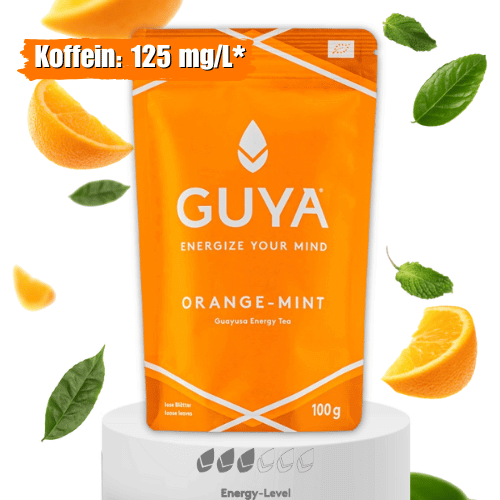
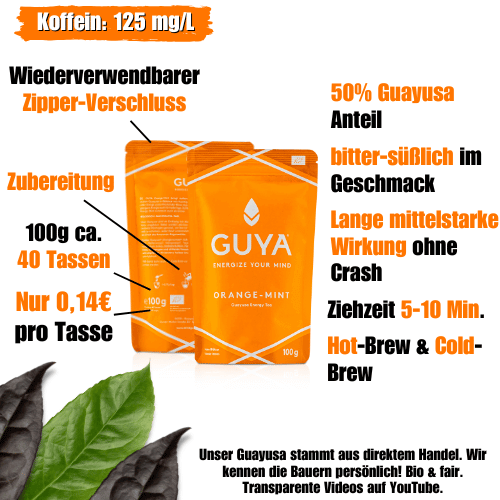
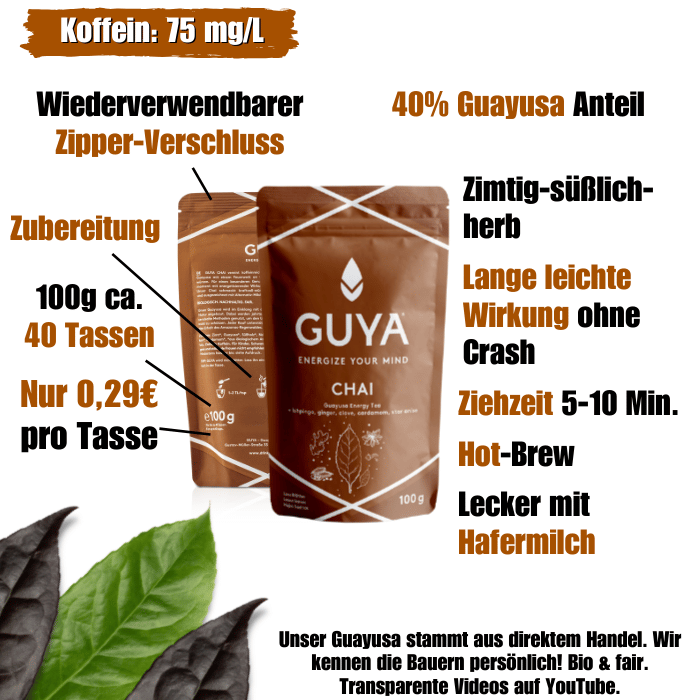
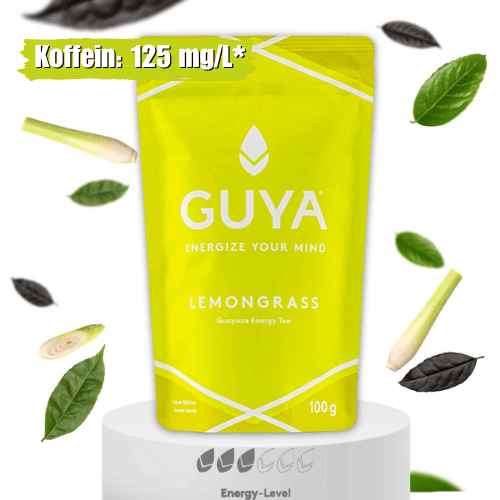
Guayusa: Highly sustainable – grown in permaculture forest gardens. They protect the Amazon from further deforestation and ensure biodiversity. You can find our sustainable Guayusa tea products in our shop .
Mate: Not very sustainable – plantations destroy rainforest.
Guarana: Rather harmful to the environment – plantations in the Amazon.
Coffee: Often unsustainable – monocultures dominate.
Green tea: Mixed – monocultures vs. wild cultivation.
Commercial plantations are harmful, while wild tea trees are more sustainable.
Kola nut: Partially sustainable – rainforest cultivation possible.
Often natural in Nigeria, but large-scale harvesting can be harmful.
Cascara: Sustainable as a by-product – little extra effort.
The coffee cherry utilizes waste and reduces waste, but coffee cultivation remains critical – unless it takes place in forest gardens, as is the case with our Robusta Cascara .
6. Frequently asked questions about caffeine alternatives
❓ Which caffeine alternative is the strongest?
Guarana has 2% to 7% caffeine and Guayusa has 1.8% to 7.6% caffeine, which are the strongest alternatives – more than coffee (1.4–3%).
❓ What makes Guayusa Caffeine so special?
Guayusa Caffeine (40–90 mg/cup; 1.8% to 7.6% in the dry leaf) works gently with L-theanine, theobromine and theophylline – no jitters, pure focus and endurance!
Read more: Guayusa Effects .
❓ Which alternative is the most sustainable?
Guayusa from permaculture forest gardens is the most sustainable – no pesticides, no fertilizers.
❓ Does mate have more caffeine than coffee?
No, mate (1.4%) has a similar amount of caffeine to Arabica coffee. Robusta coffee, on the other hand, has twice as much caffeine.
❓ Which alternative tastes best?
It depends on the taste: Guayusa is mild, Cascara is fruity, coffee is bitter and tart.
7. Conclusion: The best caffeine alternative for you
Which caffeine alternative is right for you? It depends on your needs.
Guayusa offers gentle, long-lasting energy with Guayusa caffeine – sustainable and mild in taste.
Mate provides a fast, intense boost, but its cultivation often harms the environment.
Guarana is the strongest option – ideal for endurance, despite its bitterness and plantation cultivation.
Coffee remains a classic: quick, versatile, but often unsustainable.
Green tea brings meditative calm – perfect if you are looking for gentleness.
Kola nut combines power and versatility, with some sustainable cultivation.
Cascara scores with lightness and fruitiness – a lasting bonus.
Our recommendation: Try Guayusa – it combines effect, taste, and ecology.