
Caffeine content comparison – which natural source is the strongest?

Caffeine content comparison : Guayusa leads with up to 7.6% caffeine, followed by guarana (4–8%) and coffee (1.4–3.2%). Find the best natural caffeine source for your boost!
Table of contents
- What is caffeine?
- Caffeine Content Comparison: The Top Sources
- Which source of caffeine is best?
- Conclusion
1. What is caffeine?
Summary: Caffeine is a natural stimulant that increases your focus and banishes fatigue.
What is caffeine? Caffeine is an alkaloid found in over 60 plants that stimulates your central nervous system. It blocks adenosine, a chemical that causes fatigue, and increases dopamine, which makes you alert and focused.
Dozens of studies have shown that caffeine significantly improves cognitive performance at 50–400 mg per day. One example is the study by Simone Cappelletti and the University of Rome .
You can find out more about the effects of caffeine in our article: All about caffeine , caffeine benefits and side effects of caffeine .
But: How much caffeine does each source have , and which is the strongest?
2. Caffeine Content Comparison: The Top Caffeine Sources
Summary: Guayusa leads with up to 7.6% caffeine, followed by guarana and coffee – here are the details.
We compare the best natural caffeine sources based on caffeine content (percent of dry matter or mg per serving). Values vary depending on the variety, processing, and preparation.
You can compare hundreds of other caffeinated drinks using our caffeine calculator: Click here for the caffeine comparison .
2.1. Guayusa
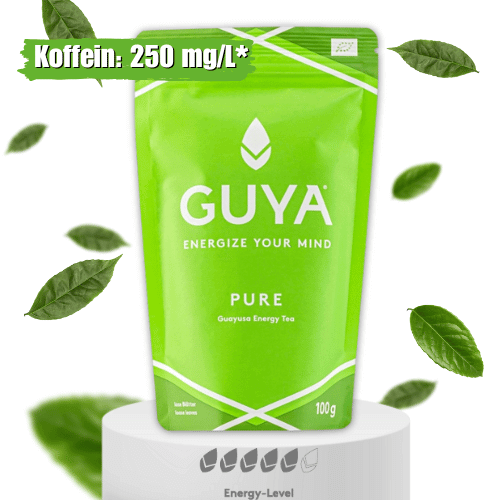
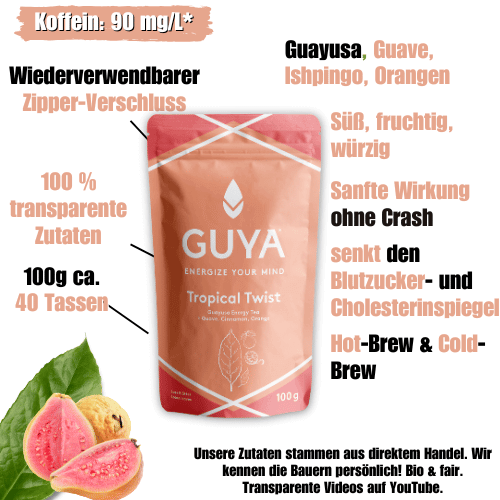
Caffeine content: 2–7.6% (dry matter), ~90–200 mg per cup (400 ml).
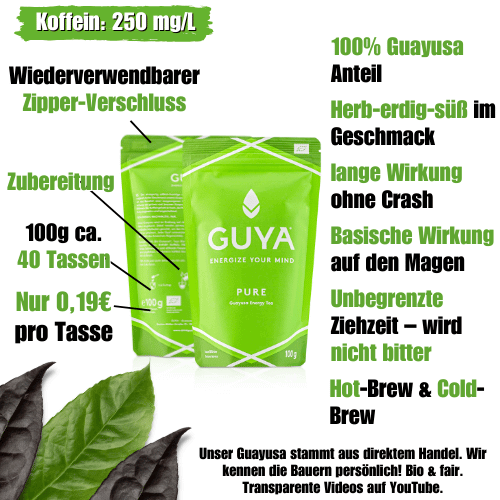
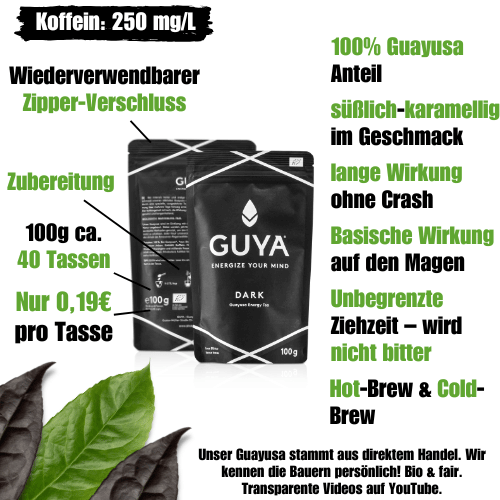
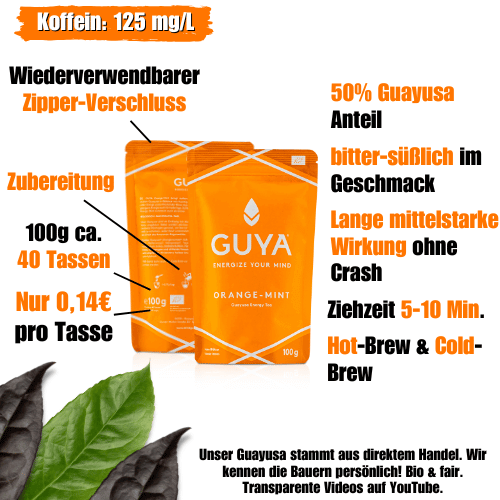
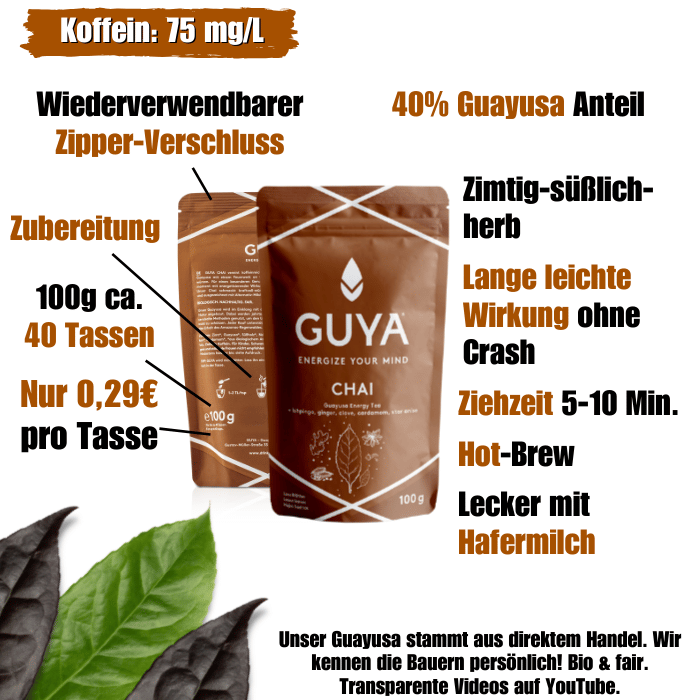
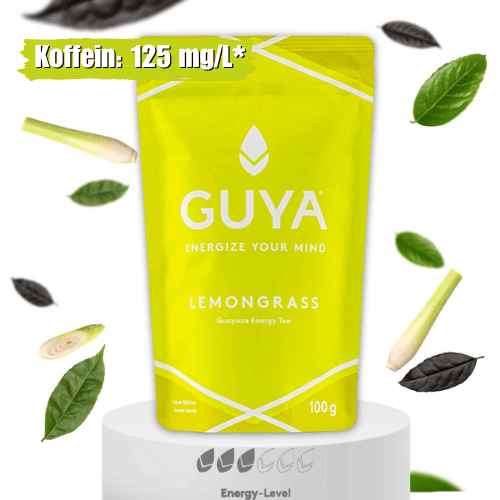
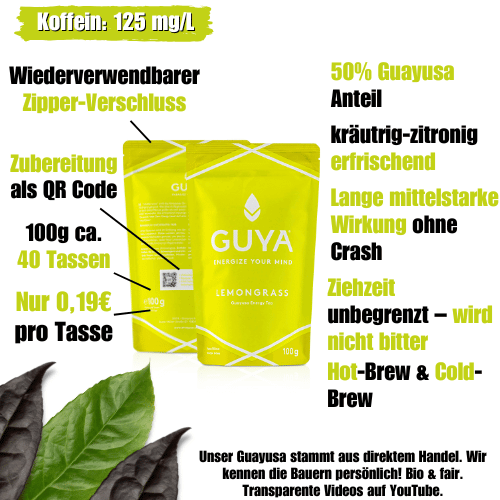
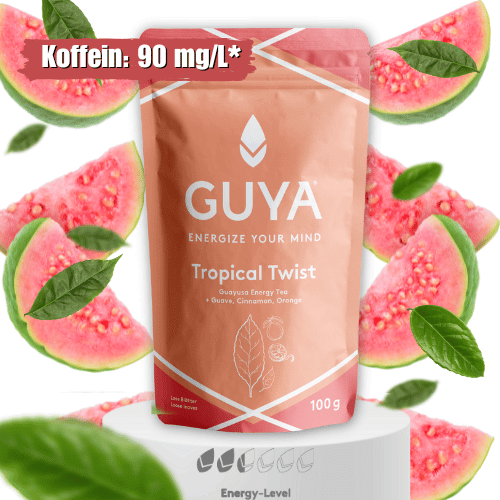
Guayusa is the caffeine king! This Amazonian plant provides up to 7.6% caffeine—more than any other source.
Just 3 g of guayusa (5 minutes of steeping time) delivers approximately 150 mg of caffeine. Thanks to L-theanine and other binding substances such as theobromine and theophylline, it has a gentle, non-rapid effect.
Read more about this in our Guayusa Tea Effects article.
2.2. Coffee
Caffeine content: 1.4–3.2% (dry matter), ~80–150 mg per cup (150 ml).
Coffee is a classic. Arabica has approximately 1.4% caffeine, while Robusta has up to 3.2%. One cup (150 ml) provides about 100 mg, depending on the roast.
According to studies , coffee works quickly, but often causes jitters because the caffeine is unbound.
2.3. Mate
Caffeine content: 0.7–1.4% (dry matter), ~30–85 mg per cup (400 ml).
Yerba mate has less caffeine than you might think—about 1.4% at its peak. One cup (400 ml, 5 g) provides approximately 50 mg.
Mate also has an invigorating effect due to theobromine, but the amount of caffeine is lower than that of Guayusa and, like coffee, it does not contain L-theanine.
2.4. Green tea
Caffeine content: 0.1–3.9% (dry matter), ~20–45 mg per cup (400 ml).
Green tea varies widely—from 0.1% (tea bags) to 6.9% (high-quality varieties). One cup (400 ml, 2 g) contains approximately 30 mg of caffeine.
The effect of L-theanine in particular is gentler than that of coffee, but also less awakening and less focused.
Green tea and Guayusa tea are the only two plants that contain L-theanine.
2.5. Matcha
Caffeine content: 1.8–4.4% (dry matter), ~35–180 mg per serving (2 g).
Matcha, ground green tea, is stronger: 2 g (~1 tsp) provides up to 80 mg of caffeine.
2.6. Black tea
Caffeine content: 0.4–4% (dry matter), ~20–90 mg per cup (400 ml).
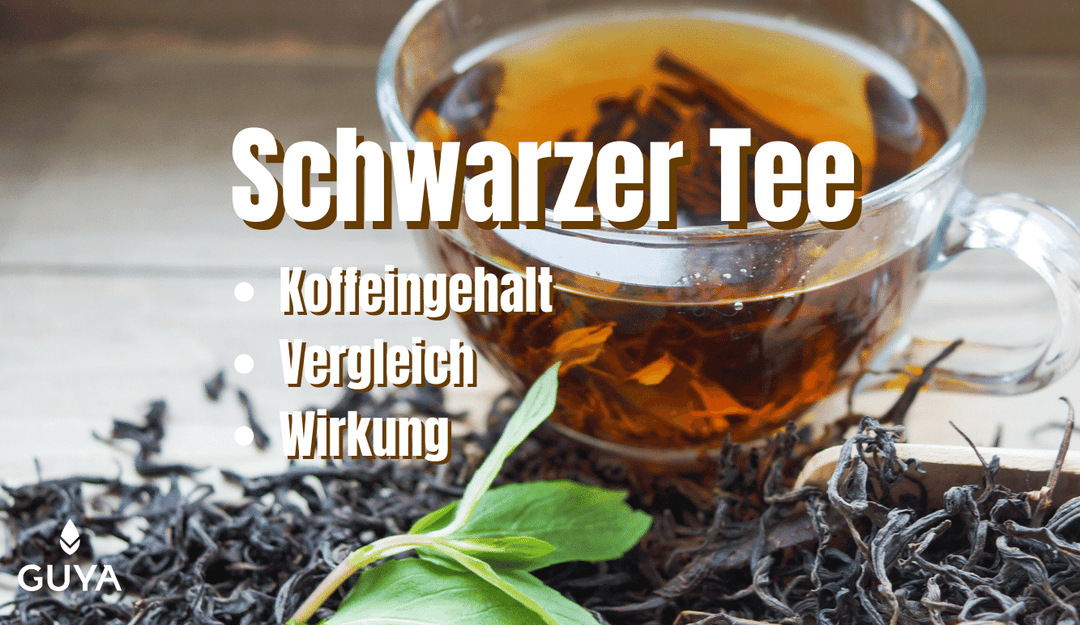
Black tea has a caffeine content of approximately 2–4%. One cup (400 ml, 2 g) contains approximately 40 mg. Fermentation makes the caffeine more free, resulting in a faster but shorter-lasting effect than green tea.
2.7. Guarana
Caffeine content: 4–8% (dry matter), ~40–80 mg per 1 g of powder.
Guarana is a caffeine heavyweight, with up to 8% caffeine. 1 g of powder provides approximately 60 mg. Studies show that guarana's effects last longer due to tannins, but it is extremely bitter and barely enjoyable.
2.8. Coffee cherry (Cascara)
Caffeine content: 0.5–1.3% (dry matter), ~10–25 mg per cup (400 ml).
Coffee cherry , the skin of the coffee bean, contains little caffeine—about 1%. One cup of cascara (400 ml, 5 g) provides approximately 15 mg.
The effect is mild, but its taste is very delicious and harmonizes perfectly with Guayusa.
2.9. Kola Nut
Caffeine content: 1.5–3.5% (dry matter), ~15–35 mg per 1 g.
Kola nut contains approximately 2–3.5% caffeine. 1 g provides approximately 25 mg. Its effects are similar to coffee, but less intense.
3. Which caffeine source is best?
Summary: Guayusa is the most potent and tolerable source of caffeine thanks to its high levels of caffeine and L-theanine.
Guayusa leads the caffeine content comparison – up to 7.6% caffeine and the gentle effect of L-theanine make it unique. Guarana is strong but bitter. Coffee delivers a quick kick, often with jitters. Matcha and green tea are mild. Mate and black tea are in the middle range, with coffee cherry and kola nut at the bottom.
Your goal decides: For maximum boost, mentally and physically, Guayusa is unbeatable.
4. Conclusion
Summary: Guayusa is the best natural source of caffeine for focus and energy without side effects.
Our caffeine content comparison shows: Guayusa dominates with up to 7.6% caffeine, followed by Guarana and coffee.
Thanks to L-theanine, Guayusa provides long-lasting energy without the crash—perfect for work, sports, or late nights. Read more about this unique plant in our " What is Guayusa? " article.