

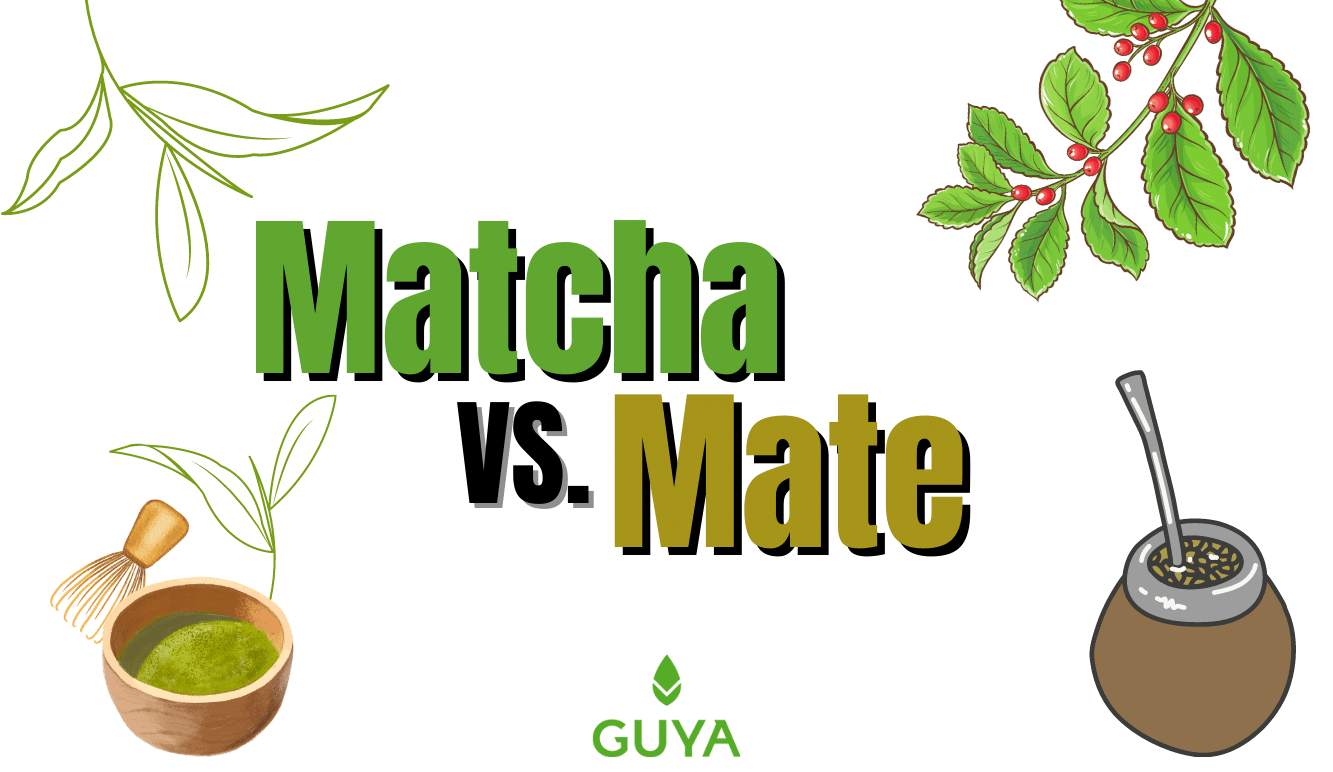
Matcha vs yerba mate: what’s the difference?
Introduction
This comparison is part of our extensive Matcha series, which you can find on our blog. Here, we compare Matcha and Yerba Mate, looking at the differences in ingredients, effects, origin and taste, just as we do in our other articles—for example, our piece on Guayusa tea.
If you are particularly interested in Matcha, we also recommend our main article on Matcha, which guides you through a range of topics.
Contents
- Difference between Matcha and Mate
- Ingredients and effects – Matcha vs Mate tea
- Taste – Matcha or Mate?
- Conclusion – Matcha vs Yerba Mate
1. Difference between Matcha and Mate
The biggest difference between the two drinks is that Yerba Mate is not technically tea at all, but a leaf infusion. By definition, only an infusion made from the tea plant is tea. Mate, on the other hand, comes from the South American Ilex paraguariensis, a plant related to Ilex guayusa.
Matcha, by contrast, consists of ground tea leaves—specifically, green tea leaves that have undergone special treatment during cultivation and processing.
Strictly speaking, then, our comparison should be called Matcha tea vs Mate infusion.
2. Ingredients and effects – Matcha vs Mate tea
To highlight the differences between Matcha and Mate and answer the question of which is better, it helps to compare their ingredients and effects.
2.1. Matcha
The effects of Matcha are particularly associated with health. Matcha does contain a lot of caffeine—1.9% to 4.4%, far more than many other caffeinated drinks—but its main effects come from other compounds.
Of particular interest are its many antioxidants and L-theanine, which is also found in Guayusa tea.
For a detailed list of the key ingredients, see our article “Matcha ingredients – Why is Matcha healthy?”.
- Matcha is a powerhouse not only because of its antioxidant content—120,000 to 180,000 Trolox—but also because of the types of antioxidants it contains. Matcha is rich in catechins, which are about twice as potent as vitamin C.
- Studies have shown that L-theanine and caffeine work together to improve cognitive abilities.
- Fat burning and metabolism are also boosted. In one study, the antioxidant EGCG led to a 17% increase in fat burning.
- The caffeine in Matcha can make you feel more alert, but—as with coffee—it can quickly become unpleasant. For that reason, it is best not to drink too much of the powder.
2.2. Mate tea
Compared with Matcha, Yerba Mate has a caffeine content of only around 1.4%. So, when it comes to which contains more caffeine, Matcha or Mate, Mate tea is towards the lower end of the scale for caffeinated drinks—even though its perceived caffeine intensity is higher.
You can find more information about Mate and other drinks in our caffeine comparison or our free e-book about caffeinated drinks.
- Yerba Mate tea contains theobromine, which, like caffeine, stimulates the cardiovascular system and also improves oxygen uptake. It is barely present in Matcha.
- Theophylline is also a well-known component that acts mainly in the respiratory tract. It increases oxygen uptake, improves its transport, relieves chronic symptoms and reduces tension.
- Bitter compounds are a major difference between Matcha and Mate. Matcha also contains bitter compounds, but their taste is much less pronounced than in Yerba Mate tea. Many people find bitter compounds unpleasant, but they can be good for digestion, our immune system and circulation.

3. Taste – Matcha or Mate?
Of course, which tastes better is in the eye of the beholder—or, more accurately, on the drinker’s tongue. Here is a general overview of the flavours of both drinks, so you can decide for yourself which comes out on top in our Matcha vs Mate comparison.
Matcha
This premium green tea powder has an intense umami aroma, accompanied by bitter and grassy notes. Good Matcha is less bitter and has a subtle hint of sweetness.
Yerba Mate
By contrast, this South American infusion has a strong, bitter and herbal taste. Many varieties of Mate also have a pronounced smoky aroma from being dried over a fire.
Yerba mate can also have earthy and grassy notes.
4. Conclusion – Matcha vs Yerba Mate
We hope this has given you an insight into the differences between Matcha and Mate. Like everything in life, this Matcha vs Mate comparison is not black and white; both drinks have advantages and disadvantages.
We think Matcha works particularly well as an indulgent drink, as well as a functional food associated with health. Yerba Mate, by contrast, is more of a cultural drink and produces a stronger, more noticeable stimulating effect.
Both drinks are an acquired taste, and in many cases, fire-drying means Mate is not particularly healthy. When buying it, look for hot-air drying, as used for Matcha.
If you found this comparison interesting, you may also enjoy our comparison with the world’s most caffeinated leaf: Matcha vs Guayusa.