

What is Guayusa tea? Effects, benefits, preparation and where to buy
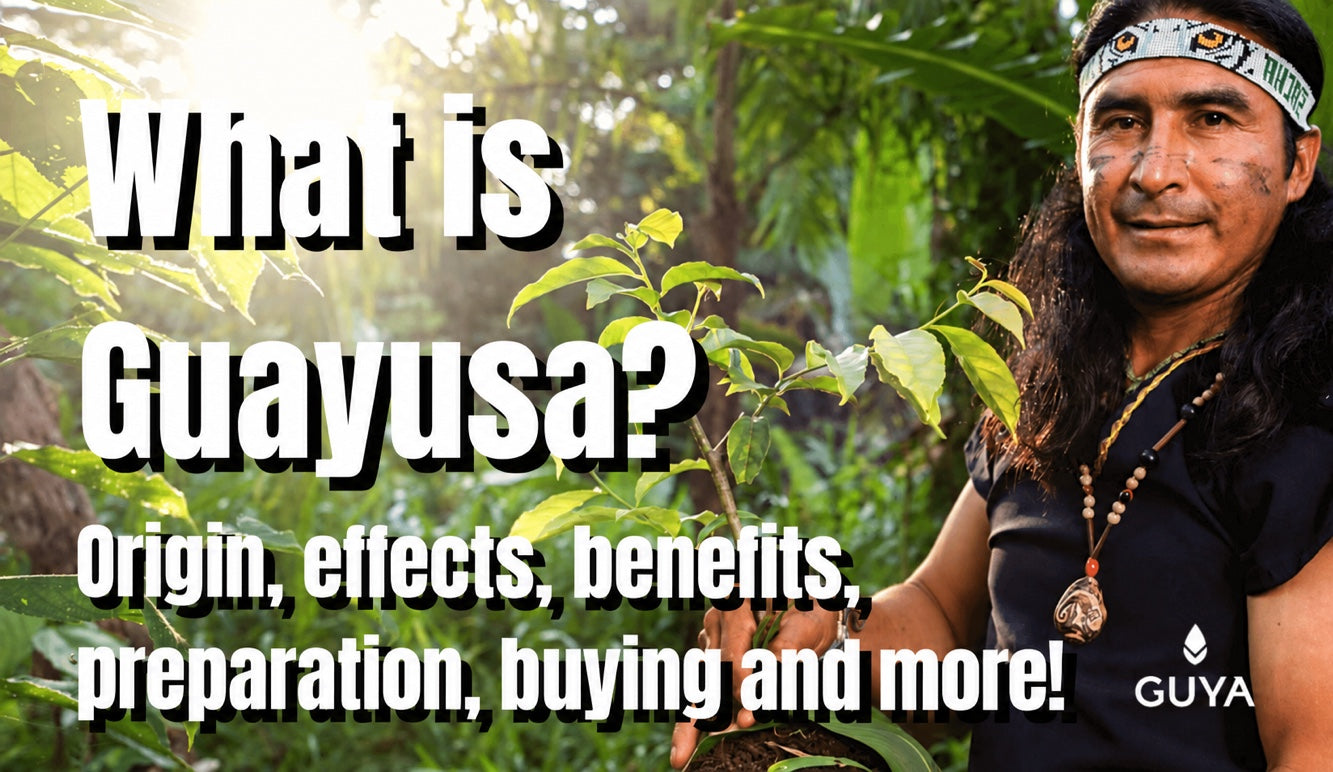
Introduction
In this guide to guayusa tea, we’ve brought together everything you need to know: what guayusa tea is, where it comes from, how to prepare it, whether it has side effects, what benefits it may offer and, of course, where to buy it.
You’ll also find links throughout the article on topics such as how guayusa is produced, its effects and benefits, and how to prepare it. Follow them to explore each subject in more detail.
Video accompanying this article
Contents
- What is guayusa tea?
- What guayusa tea contains
- How guayusa works: what makes this tea special
- Health benefits of guayusa and why you might drink it
- Does guayusa tea have side effects?
- How to prepare guayusa tea
- Which guayusa varieties are available, and which are most popular?
- Buying guayusa: what to look for
- Frequently asked questions about guayusa
You can read our in-depth article about GUYA Limitless Powder here: Guayusa extract: the caffeine paradox explained
1. What is guayusa tea?
Guayusa tea is more than a drink – it’s part of Amazonian tradition.
This caffeinated plant, also known as Ilex guayusa, has been used for thousands of years by the Kichwa Indigenous people of Ecuador.
This section covers guayusa’s origins, the plant itself, how it is grown and how it is produced.
1.1. Origin and history of the guayusa plant
Guayusa comes from the Amazon rainforest, primarily Ecuador (99%), as well as Peru and Colombia.
The Kichwa Indigenous people have used its leaves for over 1,500 years to boost energy and focus.
They call it the “night watchman” because it keeps them awake without making them feel jittery.
Find out more about Kichwa traditions in our video.
1.2. Ilex guayusa: a closer look at the plant
Ilex guayusa is an evergreen tree in the holly family that can grow up to 30 metres tall.
Its leaves are glossy, dark green and rich in caffeine, L-theanine and antioxidants.
Unlike mate or coffee, guayusa grows in shaded forest gardens. These gardens are known as chakras and are referred to in Europe as permaculture.
1.3. How is guayusa grown?
The Kichwa grow guayusa sustainably in so-called chakras – traditional forest gardens in the Amazon. In Ecuador, these chakra systems are certified under the Sello-Chakra seal.
The plants grow in the shade of other trees, such as cacao, chonta, macambo, açaí and many others, which helps promote biodiversity.
The crop is entirely organic, without pesticides or fertilisers brought in from outside the forest garden.
At GUYA, we make sure that dozens or even hundreds of useful plants grow together. In this way, we recreate the plant diversity of the Amazon rainforest and provide a natural habitat for animals and insects.
Many people and businesses mistakenly assume that organic farming and permaculture are the same thing. They are not. Permaculture systems are self-sustaining ecosystems: plants protect one another from pests and fungal infections. If an outbreak does need to be controlled, natural plant-protection products are made from other plants in the chakra, rather than brought in from elsewhere as in “organic” farming.
You can see an overview of many plants traditionally grown in a chakra in our transparency video on YouTube:
1.4. How is guayusa made?
Guayusa is made using a traditional process carried out by hand by the Kichwa.
The leaves are picked early in the morning and gently dried in tents beneath tarpaulins. They are then finished off on conveyor belts in an oven, which also sterilises them.
Our DARK variety at GUYA is lightly fermented as well, to give it a more southern, berry-like flavour.
You can also watch our videos on YouTube to see how the leaves are harvested.
Here, GUYA founder Sebastian Freidank harvests them himself:
2. What guayusa tea contains
Guayusa tea is packed with compounds that give it its distinctive profile.
Here’s a closer look at what guayusa contains and how it works.
2.1. Caffeine and L-theanine
Guayusa contains 40–90 mg of caffeine per cup.
With an average caffeine content of 3.2% in its dried leaves, guayusa is described as the most caffeinated leaf in the world, on a par with robusta coffee – in fact, robusta is the stronger of the two coffee varieties!
In our blog and on our YouTube channel, you’ll find detailed information about the effects of caffeine.
Broadly speaking, caffeine doesn’t make you alert; it helps keep you alert. Caffeine has a similar structure to the neurotransmitter adenosine, which makes us feel tired and is involved in the production of the sleep hormone melatonin. Because of this structural similarity, caffeine molecules can bind to receptors in the brain that adenosine would otherwise occupy, helping to delay the onset of tiredness.
For an overview of caffeine and its effects, watch the video below or read our A–Z guide to caffeine.
However, naturally occurring caffeine, such as that in guayusa tea, cannot be reduced to one general effect. That’s because it occurs alongside other active compounds, including the amino acid L-theanine, which promotes alpha brain waves, as shown in a study in the Journal of Functional Foods (2017).
The result? Energy and focus without the jitters – ideal for long days.
Although guayusa contains only a small amount of L-theanine (1.3 mg/g), it can help focus the mind, reduce depression, anxiety and stress, lower blood pressure and improve sleep.
Find out more in our video on the effects of L-theanine or in our blog post, “L-theanine: effects”.
2.2. Antioxidants and other nutrients
Guayusa is rich in antioxidants – reportedly twice as many as the much-praised green tea.
A study by the University of São Paulo (2019) also found that guayusa contains more polyphenols than green tea.
It also contains vitamins such as C and B, and minerals such as potassium – a boost for your health.
You can also find an antioxidant comparison of yerba mate and guayusa here: Mate vs guayusa. Guayusa contains, for example, a rare antioxidant that enables your retina to absorb more blue light. This leads to waking up more quickly and staying awake for longer.
The effects of antioxidants are often underestimated and simply labelled “healthy”. In reality, there are thousands of different antioxidants, each with different effects.
2.3. Theobromine: energy and wellbeing
The theobromine in guayusa provides a gentle energy boost, much like the theobromine in cocoa.
It widens the blood vessels and improves circulation, which can enhance your sense of wellbeing.
Unlike caffeine, theobromine has a longer-lasting, gentler effect – ideal for a relaxed lift.
You can read more in our detailed article, “The effects of theobromine”, and watch the video that accompanies it.
2.4. Theophylline: respiratory support
Theophylline in guayusa acts like a natural bronchodilator, opening the airways.
A study in the Journal of Clinical Pharmacology (2015) found that theophylline improves breathing during exercise.
Another study found a strength increase of up to 14% in maximum strength – that is, the force exerted up to complete exhaustion.
That makes guayusa ideal for athletes or when you have a cold – a respiratory boost to get more oxygen into your cells!
Read more about the effects of theophylline in the linked blog post and YouTube video.
3. How guayusa works: what makes this tea special
From energy and focus to a health boost, guayusa has a lot to offer. Its effects are unique and differ considerably from those of other stimulants such as guarana, yerba mate, green tea and coffee.
You can also download our stimulant comparison as a free PDF. It gives you a detailed look at the active compounds and effects of some of the best-known caffeinated drinks.
| Type | Caffeine |
|---|---|
| Guayusa | 2%–7.6% |
| Guarana | 2%–7% |
| Matcha | 1.9%–4.4% |
| Coffee | 1.4%–3.2% |
| Tea | 0.1%–6% |
| Yerba mate | 1.4% |
| Cocoa | 0.1%–0.7% |
3.1. Caffeine and energy without jitters
Guayusa gives you a gentle yet powerful energy boost, without the jittery side effects you may know from coffee.
With 40–90 mg of caffeine per cup, guayusa keeps you awake for hours without an energy crash – unlike guarana, which, contrary to popular belief, often causes a quick peak followed by a crash.
The secret? Its natural balance of L-theanine, theobromine and theophylline provides steady energy without overwhelming you.
The Kichwa traditionally drink guayusa before hunting to stay alert and attentive for hours – a natural boost for your day!
3.2. Antioxidants and health
Guayusa is an antioxidant powerhouse – it protects your cells and supports your health naturally.
Compared with green tea, guayusa contains up to 30% more polyphenols and twice as many antioxidants overall, according to a study by the University of São Paulo (2019) – meaning better protection against oxidative stress.
These antioxidants can reduce inflammation in the body and strengthen your cardiovascular system by improving circulation.
So guayusa is not just a pick-me-up, but a health boost too – perfect if you want to stay fit!
3.3. Focus and concentration
Guayusa gets your mind firing on all cylinders – ideal for work, study or even spiritual practices.
The unique combination of caffeine, L-theanine, theophylline and theobromine creates a state the Kichwa call “alert calm” or “a state of relaxed alertness”: you feel focused without feeling stressed.
The Kichwa traditionally use guayusa to improve concentration before hunting, during ceremonies and even for lucid dreaming.
Compared with yerba mate, which can produce an intense, almost aggressive focus, guayusa offers a gentler, more balanced clarity – ideal for creative or meditative moments when you want to feel fully present.
4. Health benefits of guayusa and why you might drink it
Guayusa is more than tea: it gives you energy, supports your health and does good for the world.
From sustainability to flavour, guayusa tea has a lot to offer.
4.1. Sustainability and Kichwa culture
Guayusa is grown sustainably by the Kichwa Indigenous people of Ecuador – a project that protects both nature and culture.
In their traditional chakras – forest gardens – guayusa grows alongside cacao, lemongrass, hibiscus, ginger, pineapple, guava, sugar cane, açaí and many other plants, promoting biodiversity and protecting the Amazon.
Every cup of guayusa supports the Kichwa: fair trade helps improve living conditions and preserve their ancient traditions.
What does this have to do with your health? Quite simply, the Amazon is the lungs of our planet, and without it the quality of life for all of us would fall dramatically.
4.2. Comparing guayusa with coffee and green tea
Guayusa is the perfect alternative to coffee and green tea, with unique benefits.
Compared with coffee, guayusa tea provides energy without jitters or stomach irritation. It is actually alkaline and easy on the stomach, even on an empty one.
Green tea contains more L-theanine, which might seem to suggest a stronger focus. But guayusa has a better balance of compounds for energy, focus and performance. It’s not always the amount that matters most, but the combination.
Guayusa tastes milder than green tea and coffee – smooth, slightly sweet and full-bodied, without bitterness.
Another plus: guayusa has no tannins like green tea, which can irritate the stomach and add bitterness.
4.3. Guayusa’s health benefits
Guayusa tea can improve your mental and physical health.
For example, guayusa has mood-lifting properties thanks to theobromine and caffeine. Its relaxing, focus-enhancing effect can noticeably reduce stress, which is a major health benefit.
The active compounds can also improve physical performance, which may be of particular interest to athletes.
The antioxidants protect cells against oxidative stress and can increase blue-light absorption, which in turn may help you wake up faster and stay awake for longer.
Guayusa’s alkaline properties make it gentle on the stomach, even in the morning.
You can find a detailed article about the health benefits and properties of guayusa here.
5. Does guayusa tea have side effects?
Many of our customers only really believe it once they have tried it for themselves: guayusa has no known side effects!
Two litres a day is no problem for an adult.
Guayusa is a gentle yet extremely effective pick-me-up. Even so, the dose makes the poison.
Don’t worry: most people tolerate guayusa well if they bear a few things in mind.
As guayusa contains caffeine – around 40–90 mg per cup – excessive consumption (more than 400 mg of caffeine per day) can cause typical caffeine-related side effects such as restlessness, insomnia or a racing heart.
At that point, even the balanced mix of L-theanine, theobromine and theophylline can no longer soften caffeine’s more intense effects.
If you’re sensitive to caffeine, start with one cup – for example, our 400 ml borosilicate glass – and avoid drinking it late in the evening.
Pregnant or breastfeeding women should also be cautious and drink no more than 1–2 cups a day, as caffeine can cross the placenta. Find out more about caffeine during pregnancy in the linked article.
At normal levels of consumption (up to one litre or a maximum of 2 litres a day), no side effects are known – just pure energy and focus!
6. How to prepare guayusa tea
Guayusa tea is easy to prepare and gives you plenty of ways to get creative.
Whether you prefer it classic or with a twist, here’s how to make a great cup of guayusa.
Get inspired and find your favourite recipe!
6.1. Classic guayusa tea recipe
The traditional preparation is simple and brings out guayusa’s natural flavour.
You’ll need: 1–2 tsp guayusa leaves (about 2 g), 400 ml water.
- Heat the water to 100 °C.
- Put the guayusa leaves in a tea infuser and place it in a glass or teapot, then pour over the freshly boiled water.
- Leave the tea to steep for 5–10 minutes. As guayusa leaves don’t turn bitter, you can leave them in the water.
- Strain, sweeten with honey if you like, and enjoy.
Tip: The Kichwa often drink guayusa early in the morning to start the day with energy.
6.2. Creative ways to enjoy guayusa tea
Guayusa is versatile – try these ideas to put a fresh spin on your tea!
Guayusa and lemon iced tea: Make the classic guayusa tea, leave it to cool, then add the juice of half a lemon, ice cubes and panela or honey – a refreshing drink for hot days!
Guayusa and ginger kick: Add 1–2 slices of fresh ginger to the classic recipe, or try our wild Amazonian ginger for a spicy boost. It supports digestion and helps with colds.
Guayusa and mint: Mix guayusa with fresh mint leaves and a squeeze of lime – perfect for clearing your head after work.
Guayusa smoothie: Brew guayusa, leave it to cool, then blend it with banana, spinach and coconut water for a healthy start to the day! Or try our “Limitless Powder”, a guayusa extract with 22% caffeine and over 30% antioxidants. It is the only guayusa concentrate on the market whose effectiveness has been proven in studies.
Here are some more tasty combinations and ready-made guayusa varieties and blends:
- Guayusa with hibiscus
- Guayusa with lemongrass
- Guayusa with cinnamon leaves
- Guayusa with orange
- Guayusa with vanilla
- Guayusa with coffee cherry
- Guayusa with pineapple, hibiscus and lemongrass
- Guayusa with guava, cinnamon leaves and orange
You’ll find even more guayusa recipe ideas here:
- How to make cold-brew guayusa
- How to make ice-brew guayusa
- How to make guayusa cappuccino
- Latte
- Espresso
- Coffee machine
- Bulletproof guayusa tea recipe
- 10 top ways to prepare guayusa
7. Which guayusa varieties are available, and which are most popular?
After lots of experimentation, we found a way to ferment the green leaves in a similar way to black tea, creating a new guayusa flavour.
We also blend our PURE guayusa with herbs, spices and fruit. You can find all the varieties here:
- PURE – original guayusa tea
- DARK – fermented guayusa tea with a sweeter flavour
- ORANGE-MINT – guayusa tea with mint and orange peel
- CHAI – guayusa tea with cinnamon, cloves, cardamom and liquorice
- LEMONGRASS – guayusa tea with lemongrass
- PURE POWDER – original guayusa in powder form
- GUAYUSA-COFFEE – a 50/50 blend of coffee and guayusa for coffee lovers
- Vanilla-Vibe: guayusa blended with the particularly intense Amazonian vanilla Vanilla Odorata.
- Jamaica-Jumpstart: guayusa tea with flor de Jamaica, a type of hibiscus.
- Tropical-Twist: guayusa with guava and Amazonian cinnamon leaf (Ishpingo)
- Pineapple-Paradise: guayusa blended with pineapple, hibiscus and lemongrass
- Ginger-Guard: guayusa with wild ginger
PURE and DARK are undoubtedly the most popular varieties. The others are a great way to add variety to your day.
8. Buying guayusa: what to look for
There are a few things to bear in mind when buying guayusa:
-
Is the company transparent?
- About its work with Indigenous farmers.
- About how it is grown in the rainforest.
- About how it is made and processed.
-
Does the company have a local presence in Ecuador, or is it just a reseller?
- At GUYA, you can follow all our activities through our transparency videos on YouTube.
-
How long has the company been around?
- GUYA was the first company in Europe to import guayusa and has been around since 2016.
-
Value for money
- Beware of cheap products! Guayusa only grows in the Amazon region, and traditional cultivation is labour-intensive. Any guayusa product costing less than €10 per 100 g inevitably involves compromises on sustainability. At GUYA, the farmers set their own prices, not the wholesalers!
-
Pure ingredients
- Flavourings, whether organic, natural or conventional, can diminish the effects of guayusa.
-
Fair trade
- Organic and Fairtrade labels are not enough. In fact, these labels are no longer a guarantee of quality. Monocultures and rainforest clearance can be certified as organic, while Fairtrade can mean working with people who pick crops under the sun for 12 hours a day.
- At GUYA, the Kichwa Indigenous people of the Amazon decide for themselves what fair trade means. The Sello-Chakra seal, founded by Indigenous people themselves, represents holistic, biodiverse cultivation rooted in a tradition thousands of years old.
Where can you buy our guayusa tea? Our online shop is always ready to take your order. We’re not in shops yet – find out why here and here.
9. Frequently asked questions about guayusa
Have a question about guayusa? Here are clear, straightforward answers to some of the most common ones.
From its effects to how to prepare it – everything you need to know.
❓ How does guayusa tea affect sleep?
Guayusa contains 40–90 mg of caffeine per cup, which can keep you awake – so it’s not ideal just before bed.
However, thanks to L-theanine, its effects are gentler than coffee’s, and many of our customers say they can focus better without sleep problems if they drink guayusa from the morning until late afternoon.
Tip: If you’re sensitive to caffeine, drink guayusa by 4 pm at the latest; if you’re used to plenty of caffeine, by 6 pm.
Find out more about the effects: How guayusa works.
❓ Can I drink guayusa during pregnancy?
Guayusa contains caffeine, so you should be cautious during pregnancy.
The German Nutrition Society recommends a maximum of 200 mg of caffeine a day – about 2 cups of guayusa.
Speak to your doctor, especially if you’re breastfeeding, as caffeine can cross the placenta.
More about side effects: Guayusa side effects.
❓ How much guayusa tea should I drink each day?
For most people, 1–3 cups (400–1,200 ml) a day is ideal for enjoying the benefits.
That works out at around 120–270 mg of caffeine – below the general limit of 400 mg a day.
Listen to your body.
❓ How long should guayusa tea steep?
Guayusa contains no bitter compounds, so, like herbal tea, it can simply be left in the water. We recommend a minimum steeping time of 5–10 minutes.
More about preparation: How to prepare guayusa.
❓ Where does the best guayusa tea come from?
The best guayusa tea comes from Ecuador, directly from the Kichwa Indigenous people, who grow the leaves sustainably in forest gardens.
Look for the Sello-Chakra seal, which is awarded exclusively by an Indigenous-led cooperative in Ecuador.
More about buying guayusa: Buying guayusa.
Still have questions? Send us an email or book a video call with our founder, Sebastian.